Showing posts with label porsche. Show all posts

Wednesday, January 20, 2010

Tarmac's Top Ten 'Till 'Ten

Okay, so we're a little late on the bandwagon, but Tarmac has finally compiled it's list of the top ten cars of the last ten years. From 2000 until the end of 2009 there's been a seismic shift in the kind of cars available to the market, and about the attitudes towards the car that have influenced the characteristics people look for.

Although Tarmac is by and large influenced by smaller and more efficient cars, the list reflects a diverse selection of cars that have all made a big impact on the automotive world over the last ten years. So, in no particular order...

MINI Cooper
The BMW Mini came in for some flak when it was released, much of it from original Mini owners who disliked BMW's cavalier use of "their" brand. The press loved it however. The Cooper version was arguably the best of the bunch (and Evo magazine would agree) because it offered fun in the spirit of the original Mini in a reliable and useable package. They're finally coming down in value on the second hand market now too, so there's never been a better time to buy.

Porsche Cayman
Porsche has done the unthinkable - they've accidentally built a car that, were it not for the (deliberate) deficit in power, completely eclipses their stalwart 911 in all areas. Car journalists barely have a bad word to say about it save for a slightly high price, and it seems to successfully win handling tests the world over. And being a Porsche, it's utterly useable day to day.

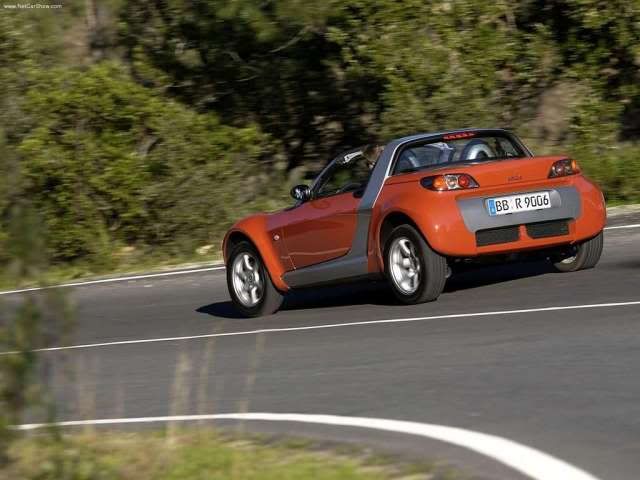
smart Roadster
The "My First Porsche"? There's certainly more than a hint of Stuttgart in the sound (and location) of the engine, an 800cc triple mounted inches behind your lower back. The styling is fantastic and it pulls the usual smart trick of a great driving position and loads of space. Unless you happen to be luggage, in which case you'd better be small. Even with the suspect gearbox it's a bundle of fun and 50mpg is there for the taking.

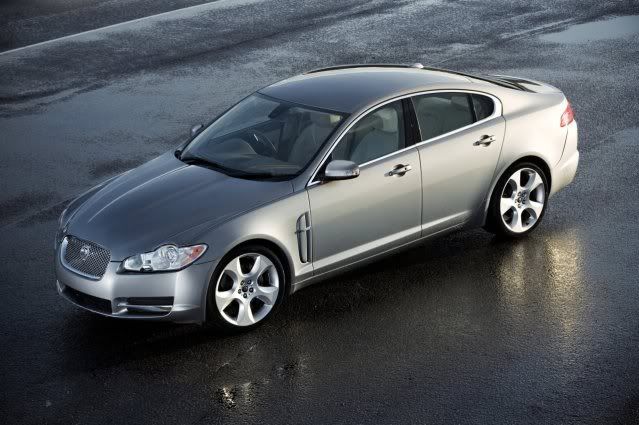
Jaguar XF
The car to prove that Jaguar a) still has "it" and b) still has a future. Thankfully the latter has been secured by Ratan Tata's purchase of the company, but the former is assured in the way that the XF went straight to the top of the class with great styling, supreme comfort and cutting edge technology. A welcome return to form.

Tesla Roadster
Hugely important, the Tesla. A fledgeling company (albeit one with strong financial backing) arrives in the market and immediately creates an electric car exponentially better than any other that's come before. Performance is seriously impressive and it even has a great range. The next few years will see the Model S, a pretty saloon that'll no doubt re-write the electric car rulebook once again.

Audi A2
Arriving right at the start of the millennium, the A2 was apparently ten years too early. A lighweight aluminium body, ultra-efficient engines and cutting-edge styling all went unnoticed when people saw the price, which starting at £12.5k was just too much for a B-segment car competing against Ford Fiestas. Best model was the later 90bhp 1.4 TDI that managed an average of 64mpg and 60mph in ten seconds.

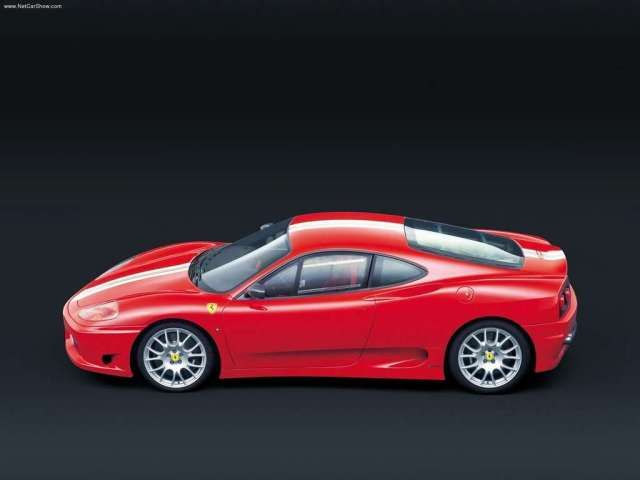
Ferrari 360CS
Unlike the A2 the CS isn't the most fuel efficient car around, but it wins it's top ten slot for being the ultimate expression of one of the ultimate marques. The normal 360 was wonderful but the Challenge Stradale is like the standard model fuelled after a night of Vodka and Red Bull. Louder, meaner, more aggressive and ready to take on the world. There's never been a better car on which to paint go-faster stripes.

Lotus Elise S
Impressive though the Tesla is, the basic Elise proves that you don't need an electric drivetrain to make a sports car efficient. With 1.8 litres of Toyota power, sixty arrives in under six seconds and you're still offered an average of 37mpg when you aren't using all the revs. And being a Toyota engine, there's a strange sense of calm that models with the Rover K-Series never offered. Sublime handling? That's been there all along.

Renaultsport Clio 200 Cup
Renault have probably averaged one hot Clio each year for the past ten, but the latest is definitely the greatest. Sure, the new front end is questionable (Tarmac loves it though), but the giant killing ability certainly isn't. The 200 Cup is a true emperor in a long dynasty of Clios - 16V, Williams, 172, 172 Trophy, 182, 182 Cup, 197,197 Cup, 200...

Volkswagen Scirocco
Who'd have thought it? Trustworthy - if slightly staid - Volkwagen, bringing out one of the most attractive designs of the last decade? Yet that's what they've done with the Scirocco, and yet being based on the old faithful Golf you still get all the comfort and quality you'd expect. It's a car that makes you question the need for a 3-door Golf with style and handling like the Scirocco offers.

Here's to the next ten years...

(Images: Audi, Auto Express, Daimler-Chrysler, Ferrari, Jaguar, MINI, Porsche, Renault, Tesla, Volkswagen)

Saturday, January 16, 2010

Concept Car 2006 Porsche 911 Turbo 997 with TechArt Tuning

World Debut at the ESSEN-MOTOR-SHOW 2006. Porsche 911 Turbo 997 with TechArt Tuning review:TechArt Tuning for the new Porsche 911 Turbo 580 hp / 427 kW, 0 / 100 km/h in 3.46 Seconds, 339 km/h V/max. Maximum performance paired with optimized aerodynamics: TechArt Automobildesign turns the new Porsche 911 Turbo into one of the world’s fastest and most powerful street-legal sports cars. 580 hp / 427 kW, 0 / 100 km/h in 3.46 seconds only and a maximum speed of 339 km/h are the most important performance figures of this car.Concept Car 2006 Porsche 911 Turbo 997 with TechArt TuningBeautiful Design Car Porsche 911 Turbo 997 with TechArt Tuning

The TechArt VarioPlus coil-over suspension is available for the electronically adjustable PASM damper system of the new Turbo. This chassis offers not only an individually adjustable ride height by up to 25 millimeters, but also selectable ‘Normal’ and ‘Sport’ damper settings at the push of a button on the dashboard. However, the settings are not limited to these presets. Both settings automatically firm up their damper rates during sporty driving. The result is an optimal symbiosis of excellent ride comfort during leisurely driving and agile, highly responsive handling during fast cornering. As a world-renowned specialist for exclusive interior creations TechArt Automobil design also offers individual interiors for the latest 911 top-of-the-line version in all colors and designs. The 580 hp / 427 kW Turbo was upgraded with an exclusive TechArt CarboBlack leather trim, white cockpit panels matching the car’s outside color and further sporty accessories. They include an ergonomically shaped airbag sport steering wheel, foot pedals, foot rest and shift knob all made from aluminum as well as stainless-steel sill plates with TechArt logo.

The 3.6 liter boxer engine was modified by TechArt in many details. Two bigger turbochargers contribute to the TechArt engine tuning just as the sports air filter and the stainless steel exhaust system with special manifolds and integrated high performance catalysts. All modifications get exactly tuned by the recalibrated ECU. After the conversion the engine delivers 580 hp / 427 kW at 6,000 rpm and a maximum torque of 700 Nm at 4,850 rpm. Power transmission to all four wheels is made via a modified six-speed manual gearbox with TechArt gearshift travel shortage and additional gearbox-oil cooling. Of course the TechArt engine conversion is also available for cars with Tiptronic transmission. The coupe tuned by TechArt is one of the world’s fastest super sports cars: The two-seater coupe catapults from 0 – 100 km/h in 3.46 seconds. Maximum speed is 339 km/h.


Water cooled six-cylinder boxer twin-turbo engine with TechArt performance tuning consisting of 2 special turbochargers with variable turbine geometry, sports air filter, TechArt stainless steel high performance exhaust system with special manifolds and steel-bed high performance catalysts and a recalibrated ECU. TechArt engine design package. Displacement 3,600 cm
Bore x stroke 100 x 76.4 mm
Max. power 580 hp / 427 kW at 6,000 rpm
Max. torque 700 Nm at 4,850 rpm (from 3,200 / 6,000 rpm permanently more than 670 Nm)
Compression-ratio 9.0:1
Max. boost 1.2 bar
Max. revs 7,100 rpm
Power output per liter 161.11 hp per liter capacity Permanent four-wheel drive
Six-speed manual gearbox with modified transmission-ratios in 5th and 6th speed, TechArt gearshift travel shortage and additional gearbox-oil cooling Gear ratios:
1st speed 3.82
2nd speed 2.14
3rd speed 1.48
4th speed 1.18
5th speed 0.92
6th speed 0.75 Axle ratio 3.44 TechArt VarioPlus coil-over sport suspension TechArt Formula light alloy wheels, one-piece, 8.5Jx20 in front with 245/30 R 20 ContiSportContact3 tires, 12Jx20 in rear with 325/25 R 20 tires. Standard Porsche Ceramic Composite Brake
Front: 380 mm discs and 6-pot aluminum Monobloc fixed calipers
Rear: 350 mm discs and 4-pot aluminum Monobloc fixed calipers Bodywork:
2+2 seater coupe with TechArt body styling kit I, consisting of: front spoiler I, side skirts, side mirror moldings, rear spoiler I, roof spoiler, rear diffuser, headlight moldings
Length 4,450 mm
Width 1,852 mm
Height 1,300 mm
Wheel-base 2,350 mm
Tank capacity 67 liters
Curb weight 1,592 kg
Weight/power ratio 2.74 kg / hp Performances:
Acceleration: 0/100 km/h: 3.46 s
Maximum speed: 339 km/h Retail price: about 200,000 Euros
End of Porsche 911 Turbo 997 with TechArt Tuning review.


These performance figures make greatest demands on perfectly balanced aerodynamics. The TechArt designers developed bodywork components in the wind tunnel which don’t only give the 911 Turbo its distinctive look but especially optimal aerodynamic downforce and a drag coefficient reduced by 4 percent. The TechArt front spoiler reduces aerodynamic lift by 15 percent. They also moulded a new wing profile for the retractable production rear spoiler which produces 20 percent extra downforce in conjunction with the TechArt rear diffuser. The understated TechArt roof spoiler visually stretches the roofline. The TechArt side sills give the 911 top-of-the-line model a longer, sleeker look. The side mirrors can be attractively upgraded using the TechArt mirror moldings. The look is rounded out with moldings for the headlights. Especially for the new Porsche 911 Turbo they developed the striking TechArt Formula five-spoke wheels in size 8.5Jx20 in front and in size 12Jx20 on the rear axle. TechArt recommends ContiSportContact 3 tires in sizes 245/30 ZR 20 and 325/25 ZR 20 for mounting on these wheels.

Concept car Porsche 911 Turbo TechArt GTstreet Model 997


The cockpit of the TechArt GTstreet also differs distinctly from the stock 911 Turbo. Among the differences is an exclusive leather interior with color-contrasted stitching and sporty CarboBlack highlights. The coupe is further equipped with an ergonomically shaped TechArt sport steering wheel, aluminum foot pedals, foot rest and shifter, as well as with illuminated door sills sporting the TechArt logo.


German TechArt studio will present in Geneva its latest tire-burner based on the current Porsche 911 Turbo 997 series super-coupe. While most tuners focus their efforts on eye-popping exterior enhancements, TechArt’s engineers have centered their attention


With its 2001 TechArt GTstreet, based on the Porsche 911 Turbo of the 996 model series, TechArt created one of the fastest and most powerful street-legal sports cars of its time. The next evolutionary stage of this fascinating concept celebrates its world debut at the Geneva Motor Show 2007. The new TechArt GTstreet, based on the 911 Turbo of the latest 997 series, starts at $320,000. Like the predecessor the new GTstreet edition centers on a powerful engine. The 3.6-liter twin-turbo flat engine is modified by the TechArt engine specialists and now develops 630 bhp at 6,800 rpm, up from standard 480 bhp. Peak torque increases to 605 lb-ft at 4,500 rpm.

Concept car Porsche 911 Turbo TechArt GTstreet Model 997Porsche 911 Turbo TechArt on Back Body

The TechArt GTstreet rear fascia with integrated carbon-fiber diffuser contributes to the strong downforce generated on the rear axle. It also provides the perfect backdrop for the quad exhaust of the TechArt high-performance exhaust system. TechArt Automobildesign offers a number of versions of its popular Formula wheel in sizes 8.5Jx20 in front and 12Jx20 on the rear axle. GTstreet buyers can choose from several color combinations and between the one-piece Formula and the multi-piece Formula II designs. The Formula II wheel features an exchangeable wheel lip. For optimal tires TechArt chose ContiSportContact 3 high-performance tires in sizes 245/30 ZR20 and 325/25 ZR20. The large 20-inch wheels also provide the necessary space for the especially powerful and durable TechArt high-performance brake system. It features six-piston aluminum fixed calipers and 390-millimeter discs on the front axle. The rear axle is fitted with 365-millimeter discs and four-piston fixed calipers. The TechArt GTstreet comes with a TechArt VarioPlus coil-over suspension that is based on the electronically adjustable PASM damping system of the 911 Turbo. This chassis allows individual ride-height lowering by up to 25 millimeters and push-button selection of two different damper settings, “Normal” or “Sport.” However, the dampers are not limited to these presets. Sporty driving automatically results in firmer damper settings in both modes, thus combining excellent ride comfort during normal driving with agile and responsive handling during fast cornering.


The body kit for the TechArt GTstreet was created in the wind tunnel, and offers an optimal symbiosis of aerodynamic down force, minimized drag and striking design. The front fascia of the GTstreet with retractable carbon-fiber splitter produces down force on the front axle and provides radiator, oil coolers and brakes with more cooling air, thanks to its large, striking air inlets. The auxiliary headlamp units with daytime running lights and fog lamps improve active safety. They also give the car even more passing clout. The TechArt GTstreet fender flares on the front axle add 10 mm to the two-door’s width and give it an even more dynamic appearance. But that’s not all: The air outlets behind the front wheel houses optimize brake venting. The larger air ducts in the rear sidewalls provide engine and inter coolers with a larger supply of cooling air. For an optimal transition between front and rear fenders the TechArt designers have developed rocker panels that complement the new contours. TechArt mirror and headlamp moldings provide the finishing touches. The TechArt roof spoiler extends the roof line and optimizes airflow to the adjustable rear airfoil of the GTstreet.

Concept car Porsche 911 Turbo TechArt GTstreet Model 997


The cockpit of the TechArt GTstreet also differs distinctly from the stock 911 Turbo. Among the differences is an exclusive leather interior with color-contrasted stitching and sporty CarboBlack highlights. The coupe is further equipped with an ergonomically shaped TechArt sport steering wheel, aluminum foot pedals, foot rest and shifter, as well as with illuminated door sills sporting the TechArt logo.


German TechArt studio will present in Geneva its latest tire-burner based on the current Porsche 911 Turbo 997 series super-coupe. While most tuners focus their efforts on eye-popping exterior enhancements, TechArt’s engineers have centered their attention


With its 2001 TechArt GTstreet, based on the Porsche 911 Turbo of the 996 model series, TechArt created one of the fastest and most powerful street-legal sports cars of its time. The next evolutionary stage of this fascinating concept celebrates its world debut at the Geneva Motor Show 2007. The new TechArt GTstreet, based on the 911 Turbo of the latest 997 series, starts at $320,000. Like the predecessor the new GTstreet edition centers on a powerful engine. The 3.6-liter twin-turbo flat engine is modified by the TechArt engine specialists and now develops 630 bhp at 6,800 rpm, up from standard 480 bhp. Peak torque increases to 605 lb-ft at 4,500 rpm.

Concept car Porsche 911 Turbo TechArt GTstreet Model 997Porsche 911 Turbo TechArt on Back Body

The TechArt GTstreet rear fascia with integrated carbon-fiber diffuser contributes to the strong downforce generated on the rear axle. It also provides the perfect backdrop for the quad exhaust of the TechArt high-performance exhaust system. TechArt Automobildesign offers a number of versions of its popular Formula wheel in sizes 8.5Jx20 in front and 12Jx20 on the rear axle. GTstreet buyers can choose from several color combinations and between the one-piece Formula and the multi-piece Formula II designs. The Formula II wheel features an exchangeable wheel lip. For optimal tires TechArt chose ContiSportContact 3 high-performance tires in sizes 245/30 ZR20 and 325/25 ZR20. The large 20-inch wheels also provide the necessary space for the especially powerful and durable TechArt high-performance brake system. It features six-piston aluminum fixed calipers and 390-millimeter discs on the front axle. The rear axle is fitted with 365-millimeter discs and four-piston fixed calipers. The TechArt GTstreet comes with a TechArt VarioPlus coil-over suspension that is based on the electronically adjustable PASM damping system of the 911 Turbo. This chassis allows individual ride-height lowering by up to 25 millimeters and push-button selection of two different damper settings, “Normal” or “Sport.” However, the dampers are not limited to these presets. Sporty driving automatically results in firmer damper settings in both modes, thus combining excellent ride comfort during normal driving with agile and responsive handling during fast cornering.


The body kit for the TechArt GTstreet was created in the wind tunnel, and offers an optimal symbiosis of aerodynamic down force, minimized drag and striking design. The front fascia of the GTstreet with retractable carbon-fiber splitter produces down force on the front axle and provides radiator, oil coolers and brakes with more cooling air, thanks to its large, striking air inlets. The auxiliary headlamp units with daytime running lights and fog lamps improve active safety. They also give the car even more passing clout. The TechArt GTstreet fender flares on the front axle add 10 mm to the two-door’s width and give it an even more dynamic appearance. But that’s not all: The air outlets behind the front wheel houses optimize brake venting. The larger air ducts in the rear sidewalls provide engine and inter coolers with a larger supply of cooling air. For an optimal transition between front and rear fenders the TechArt designers have developed rocker panels that complement the new contours. TechArt mirror and headlamp moldings provide the finishing touches. The TechArt roof spoiler extends the roof line and optimizes airflow to the adjustable rear airfoil of the GTstreet.

Thursday, January 14, 2010

2010 PORSCHE 911 GT3 R PICTURES MODIFIED

2010 PORSCHE 911 GT3 R PICTURES MODIFIED2010 PORSCHE 911 GT3 R PICTURES MODIFIED
2010 PORSCHE 911 GT3 R PICTURES MODIFIEDLike the 911 GT3 Cup and 911 GT3 RSR, the Porsche 911 GT3 R is designed and built by the Porsche Motorsport Department at the company's Weissach Development Centre. First deliveries to customer teams around the world begin in the spring, and the base price of the Porsche 911 GT3 R is 279,000 Euros plus local sales tax/VAT

2010 PORSCHE 911 GT3 R PICTURES MODIFIED

Monday, January 4, 2010

Nürburgring: Porsche hybrid to campaign at 24 hours


If a report from Autosport Japan is to be believed, Porsche could be readying a hybrid version of its 911 GT3 for this May's 24 Hours of Nürburgring race.


With a gas-electric Cayenne on the way next year and a Panamera hybrid in development, the rumor of a race-spec hybrid doesn't seem that far-fetched considering Porsche's proclivity for migrating it's racing knowhow from the track to the road (although it's a bit backwards in this application).


Regardless, Porsche hasn't confirmed the hybrid's participation in the enduro yet, but rumors have been circulating that the automaker will use the knowledge it gleans from the 'Ring race to campaign a GT3 hybrid in the 2011 ALMS season, with a possible running at the 24 Hours of Le Mans the same year.
via:autoblog

Wednesday, December 30, 2009

Hemmings Find of the Day: Porsche 356 Prototype hits the market


The Porsche 356 holds a special place amongst the ranks of historic automobiles. As one of the first vehicles to wear the Porsche badge after World War II, this car has direct ties to the model that would forever define the German maker of fine sportscars. That, of course, is the iconic 911.


Collectors, take note: one of two early 356 prototypes is now up for sale, located in New York. We wonder, would that make this a 355? No, probably not. Looking over pictures of the car, it's clear to see the shape that would eventually turn into the classic 356 as well as the expected air-cooled powerplant sitting aft of the cockpit and driving the rear wheels.


Notable features that didn't make it to the production car include the front grille that directs cooling air to the rear-mounted engine and the head lamps that are sunk into the bodywork on either side. No price is listed on this particular sale, but we certainly wouldn't expect it to be sold without a large sum of money changing hands.


More Photos

Tuesday, December 29, 2009

2011 Porsche Cayenne SUV gets Sleeker Spy Photos


Not surprisingly, the Cayenne's dashboard looks very similar to the Panamera sports sedan featuring a five-gauge cluster and a center stack dominated by a large screen with the climate controls positioned underneath. Flanking the gear lever on the elevated lower console are the suspension controls and numerous other buttons.


Porsche is putting the final touches on its second generation Cayenne SUV that is anticipated to be introduced at a major car show in the first half of 2010. These new spy pictures suggest that the next Cayenne will be far better looking than its graceless predecessor adopting a smoother design language and more dynamic proportions accentuated by the lowered roofline, smaller rear window and steeper angle of the rear tailgate.


The direct-injection powerplants are expected to be carry-over units from the Panamera. A VW Group-sourced V6 petrol producing around 300-horsepower will serve as the entry-level engine, while the range will top out with Porsche's 4.8-liter V8 delivering 400HP in naturally aspirated form and 500HP in turbo spec.


Word from Germany is that Porsche's engineers have worked overtime to reduce the SUV's weight as much as 200kg or 440 lbs over the current model with obvious benefits in handling, fuel economy, CO2 emissions and of course, performance figures.


The V8 models will most likely feature Porsche's seven-speed double-clutch PDK transmission as standard.

Porsche will also offer the new Cayenne with a V6 gasoline-electric hybrid powerplant as well as a V6 diesel engine.

The next Cayenne will be built on a modified version of the Panamera's platform that will also be shared with the second generation VW Touareg.
Source:carscoop

Quick Spin: TPCRacing Cayman S Turbo picks up where Porsche left off


When Porsche introduced the Cayman in 2006, one thing was abundantly clear: Porsche had muzzled its midship coupe to prevent cannibalizing 911 sales. Despite a more favorable weight distribution and an unflappable chassis, the Cayman lacked the power to exploit its excellent underpinnings, even in "S" guise. So like its Boxster sibling, the Cayman was destined to play second fiddle to Porsche's iconic rear-engine flagship. From a business perspective, Porsche's decision made sense. For enthusiasts, it was yet another bitter pill from Zuffenhausen.


Levitas began producing race cars back in the late Eightes, and over the course of the next decade and a half he managed the turbocharger programs for the Nissan 300ZX, Mazda RX7, Lotus Esprit and Consulier GTPs in the IMSA Supercar Series. Mike's background and advanced aeronautical training eventually led him to build some of the best Porsche race cars around. Porsche Club racing, Motorola Cup action, and a brief dip into Mercedes sedans eventually led him to the Grand American Rolex Sports Car Series.


The result is the TPCRacing Cayman S Turbo Kit. Producing around 485 horsepower, it's packing more ponies than – until recently – nearly any vehicle in Porsche's lineup, save the GT2. And that's only with 5.5-pounds of boost. With such a low amount of pressure, the turbo kit puts barely any additional stress on the stock internals of the 3.4-liter flat-six.


TPCRacing sells its Cayman Turbo Kit (with intercooler) for a buck less than ten grand. It includes nearly everything needed for installation: a cat-back exhaust, turbocharger, liquid-to-air intercooler, new intake plenum, all brackets/plumbing/fitting/hardware/clamps, upgraded injectors and custom silicone piping. The ECU needs to be shipped to TPC for reprogramming, but anyone with a fair amount of mechanical aptitude can do the installation. The total tab for our tester was about $12,000 according to the owner. Of course, he also went nuts with suspension, brakes, wheels, tires and body mods that more than doubled that figure.


We got a chance to sample the full-on intercooled turbo kit and, needless to say, it's like no Cayman we've met before. It's a mid-engine Jekyll and Hyde. In normal commuter duty the TPC drives exactly like any other Cayman on the road. That's to say it has near perfect handling, with some of the best brakes and most precise steering ever engineered into a road-going vehicle. But dip into that throttle a bit deeper and... whoosh! As if a giant hand dropped down from the sky and gave you a gentle shove, you're hurtled along into extra-legal speeds in seconds.
more detail. ...

Monday, December 21, 2009

New photos for Gemballa Tornado GTS 750 4-Seater

Gemballa Tornado GTS 750 4-Seater - 1024

At the front, we immediately noticed the new teardrop-shaped CGT headlights being used on the car, similar to those found on the Carrerra GT-based Gemballa Mirage GT. Slight modifications to the lower half of the front bumper appears to now include fog lights. In back, a new rear spoiler design includes three sections of lighting, as opposed to just one. One of the close-ups also shows the center-mounted camera in the grille, possibly part of the SUV's infotainment and night vision system.

Gemballa Tornado GTS 750 4-Seater - 1024

A new set of photos featuring the Gemballa Tornado 750 GTS 4-seater has been released by the manufacturer. Gemballa engineers have made a few changes to the €400,000 SUV-come-sports car in an effort to keep the vehicle fresh.

Gemballa Tornado GTS 750 4-Seater - 1024

Naturally, this required bigger wheels, brakes, and air intakes, all of which can be found here. Gemballa uses a 415/380 mm braking system with six-piston calipers in the front, and four-piston calipers at the back. 12x22" forged GT Sport Wheels are also used on the now 70 mm lower vehicle. The package is rounded out with sport seats in the front and back, video screens all around, leather, Alcantara, and a set of carbon trim inserts.

Gemballa Tornado GTS 750 4-Seater - 1024

Earlier in the year, we reported that engineers had stripped about 250 kilos (551 lbs) from the vehicle's weight. Combined with 750-horsepower turbo V8 engine that produces up to 1,050 Nm, this vehicle hits 100 km/h in 4.3 seconds. A top speed of over 300 km/h (186.4mph) is also possible.

Gemballa Tornado GTS 750 4-Seater - 1024

More Photos