Showing posts with label Concept car. Show all posts

Saturday, February 6, 2010

Toyota FT-HS Car Concept Gallery

High quality pictures of Toyota FT-HS concept
This Concept car carry futuristic design both exterior and interior design


This car pictures is still in concept, no detail specification yet. The original source of this car is at Car Gallery, the Original post is Toyota FT-HS Car Concept

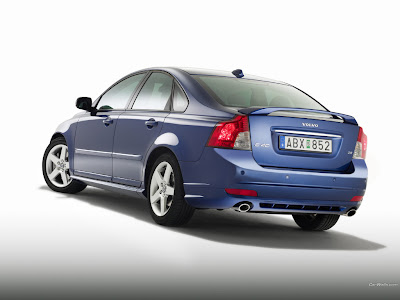
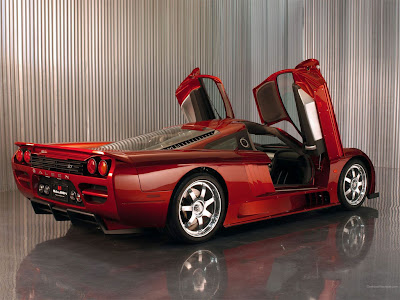
Volvo S40 wallpaper back view Dodge EV pictures Renault Mégane images Saleen S7 Twin Turbo pictures doors open

Wednesday, January 13, 2010

Detroit Auto Show: Cadillac XTS Platinum Concept


  • A new study re-imagining the luxury sedan, showcasing the progression of the Cadillac Art and Science philosophy
  • Designed from the inside out, featuring a new concept for the interface between the driver and the auto electronics
  • Plug-in hybrid system is matched with a 3.6L V-6 and all-wheel drive for dynamic and efficient performance

DETROIT – Cadillac unveiled the XTS Platinum Concept at the 2010 North American International Auto Show, suggesting a new paradigm for the luxury sedan of the future. The concept showcases Cadillac’s emerging top-of-the-line Platinum series of models, emphasizing new expressions of luxury and technological features, including a plug-in hybrid propulsion system.

The XTS Platinum Concept was designed from the inside out, re-imagining the luxury sedan as a personal headquarters, built for efficiency, luxury and connectivity. The concept introduces a new approach to in-car electronics that improves the form and function of the car’s entertainment, navigation and information systems.

“The XTS Platinum concept is the next expression of Cadillac’s Art and Science execution philosophy, reflecting our drive to deliver the latest innovations in the most artful manner,” said Bryan Nesbitt, Cadillac general manager. “We envisioned this concept as an automotive personal headquarters, using advanced technology to enable new levels of connectivity and luxury.”

The XTS Platinum Concept uses Cadillac’s 3.6L V-6 Direct Injection gas engine, paired with a plug-in hybrid system. The plug-in technology enables the battery to fully charge from a standard electrical outlet, enabling pure electric propulsion in many driving situations, especially urban commutes in which fuel efficiency may double that of a conventional hybrid.

Traditional luxury sedans were defined by elegant interiors and Cadillac’s XTS Platinum Concept propels that formula into the future. It delivers new approaches to luxury within a design that combines fine craftsmanship with customer-driven innovation. Like the current Platinum Edition products, such as Escalade Platinum and the STS and DTS Platinum sedans, the interior is based on hand cut-and-sewn materials. The XTS Platinum Concept injects more contemporary forms and themes into the interior design, including the use of Organic Light-Emitting Diode (O-LED) displays in place of traditional gauges and screens.


The concept previews a new integration philosophy guiding the development of future models with respect to in-car electronics. The intent is to progress Cadillac’s intuitive in-car electronics systems, typified by the deployable touch-screen navigation system that has been highly acclaimed in the brand’s CTS and SRX product lines. The XTS Platinum Concept previews this strategy via the minimization of traditional buttons and switches. Designers blended the display screens into a flowing instrument panel. They call it a “dead front” design, because the panels appear black until the car is turned on and the screens illuminate. The instrument panel itself reflects the XTS Platinum’s other focus – uncompromising luxury and attention to detail on the interior.

“The Platinum distinction in Cadillac means the fullest extent of luxury and technology and we’ve tried to reach even further with this concept,” said Clay Dean, Cadillac design director. “Just as the technology pushes the boundaries of what a Cadillac can offer, so do the details that make the XTS Platinum Concept an uncompromising experience.”

The interior takes inspiration from nature, specifically the intricate layers of petals that combine to form an orchid. Cadillac designers translated that into a layered and detailed interior. Light cream is the cabin’s primary color and is contrasted with darker elements, such as the steering wheel and an overhead console motif that runs the length of interior’s roof. The console is made of a richly finished wood and houses lighting features.

Premium leather seats include a new style of automotive suede, with a laser-etched pattern. The patterned material adorns the center sections of the seats and accents the door trim.
Thoughtfully detailed stitching is used throughout the interior, including the seats, instrument panel and door panels. Passengers in the spacious rear compartment of the XTS Platinum Concept also have access to the car’s connectivity feature, along with a range of infotainment choices.

“We never lost sight of the fact that a large luxury sedan needs to be spacious and accommodating,” said Dean. “Passengers will find generous headroom, legroom and knee space, along with the technology elements that make the drive more productive.”


A new proportion

The XTS Platinum Concept has a distinctive proportion that transcends the traditional aesthetic of luxury sedans and carries the brand’s Art and Science design in a more progressive manner. The unique proportion supports the “inside out” design priority, while creating a sleek profile that complements the car’s advanced technology elements and necessary aerodynamics.

“The XTS Platinum Concept design artfully conveys its focus on functionality through technology,” said Dean. “It is the antithesis of the conventional three-box sedan, suggesting the active evolution of Cadillac’s design language.”

A sweeping profile culminates in a short, high deck lid that meets the XTS Platinum Concept’s aerodynamic needs – including a rear spoiler mounted on the deck lid, incorporating the center high-mounted stop lamp. A high, sloping beltline gestures the vehicle forward, suggesting motion, while the fenders flare outward wrapping tightly around 20-inch wheels and tires. The wheel-to-body proportion was carefully tailored to visually communicate the car’s all-wheel-drive chassis.

Like the interior, the exterior elements are precisely tailored and elegantly detailed. Brushed billet aluminum trim is used selectively and the 20-inch, 11-spoke wheels feature a brushed aluminum face accented with bright inserts within the spokes. The wheels are wrapped with special Bridgestone tires that were created specifically for the XTS Platinum Concept.

Signature elements essential to Cadillac’s Art and Science design language include vertical headlamp and taillamps, with integrated light pipes and richly detailed lighting components. The headlamps feature light-emitting diode technology for bright illumination that requires less energy, as well as Cadillac’s Adaptive Forward Lighting technology, which turns the headlamps with the direction of the front wheels for greater visibility in turns.


Purposeful and efficient performance

The XTS Platinum concept’s plug-in hybrid electric propulsion system (PHEV) builds on the experience Cadillac has gained with the Escalade Hybrid and Escalade Platinum Hybrid flagship models. The plug-in capability boosts the car’s electric-only driving capability, offering additional battery energy capacity and enabling it to recharge from a standard external electrical outlet.
The key benefit of external plug-in recharging is that in many situations – such as overnight parking – the battery can fully recharge in roughly five hours while the car is not in use. The plug-in system operates at maximum efficiency when operating on power the battery has drawn from the electric grid. In some conditions, such as urban commutes, drivers can experience efficiency that doubles that of conventional hybrids.

At higher speeds or when conditions demand it, such as brisk acceleration, a combination of engine power and electric power or engine power only, propels the vehicle. The combination of the Direct Injection V-6 engine and the PHEV system featuring fully electric variable drive provides a spirited driving experience. The system provides an estimated 350 horsepower (260 kW) and 295 lb.-ft. of torque (400 Nm).

Magnetic Ride Control (MRC) enables the XTS Platinum Concept to deliver superior road-holding performance while maintaining luxury car composure in “regular” driving conditions. It uses shocks controlled by advanced magneto-rheological technology, rather than mechanical valves, to greatly accelerate response time and precision.

MRC uses electronic sensors at all four wheels to literally “read the road” every millisecond, making constant adjustments to damping to create virtually instantaneous and extremely precise control of body motions.

An advanced, specially calibrated all-wheel-drive system ensures optimal traction in wet and slippery conditions, and helps deliver maximum traction while cornering. Four-wheel disc brakes, with four-channel ABS, StabiliTrak stability control and full-function traction control complete the drivetrain details.

“The XTS Platinum Concept was designed to deliver an engaging driving experience without compromising the functional features, space and comfort customers seek in a luxury car,” said Nesbitt. “It is a new vision of luxury that uses advanced technology to deliver functionality efficiently and rewardingly.”


About Cadillac

Cadillac has been a leading luxury auto brand since 1902. In recent years, Cadillac has engineered a historic renaissance led by artful engineering and global expansion.

CADILLAC XTS PLATINUM CONCEPT SPECIFICATIONS

Vehicle type: luxury sedan concept
Wheelbase (in / mm): 111.7 / 2837
Length (in / mm): 203.5 / 5170
Width (in / mm): 74.8 / 1900
Height (in / mm): 59.1 / 1500
Track (in / mm): 62.6 / 1589 (front); 62.8 / 1594 (rear)
Powertrain: plug-in hybrid system with 3.6L Direct Injection gas engine (with variable valve timing); lithium ion battery
Suspension: four-wheel independent with Magnetic Ride Control.
Brakes: four-wheel disc with electric park brake system
Wheels: 20-in front / 20-in rear
Estimated power: 350 hp (260 kW) / 295 lb.-ft. (400 Nm)

More Photos

Video: MINI Beachcomber Concept Unveiled in Detroit


-MINI unveiled the open-air MINI Beachcomber Concept in Detroit. The SAV is a hint at the design of the upcoming MINI Crossover, which will likely debut in production form at Geneva.


Speaking on behalf of the brand, BMW board member Ian Robertson said, "The inspiration for the MINI Beachcomber Concept is clearly born from the MINI Crossover, combined with the vision of a radically open body concept." He went on to audaciously compare the concept to the classic Mini Moke, though the two vehicles have nothing in common beyond a lack of doors.


After all, the Moke measured in at 3,050 mm, while the Beachcomber stretches to 3,988 mm.

Robertson also claimed that the two vehicles share a common element in the grille, but one look at the Moke's unusual grille proves otherwise. The Beachcomber retains none of the Moke's buggy feel, serving as little more than a teaser for the Crossover.


The Beachcomber Concept also has a soft roof and lightweight doors if the driver were to experience bad weather. Look for the concept's ALL4 all-wheel drive unit to appear on the Crossover, as well as the four dedicated seats.


Robertson did say that more information about the MINI Crossover will be revealed in February.

More Photos

Monday, January 11, 2010

The Detroit showcar Audi e-tron shows another variant of an electric vehicle developed by Audi

Audi e-tron Detroit Showcar live 11.01.2010

Audi is showing an uncompromising purist compact sports car with all-electric drive at the first major auto show of 2010. The Detroit showcar Audi e-tron is the name of this 3.93 meter (154.72 in) long and 1.78 meter (70.08 in) wide but just 1.22 meter (48.03 in) tall two-seater; just a few months after the debut of the Audi e-tron at the 2009 Frankfurt Motor Show, this is now the second electric concept vehicle from the brand with the four rings.

Coupled with the Detroit showcar Audi e-tron's low gross weight of around only 1,350 kilograms (2976.24 lb), high-torque power units driving the rear wheels guarantee commensurate road performance. Two electric motors with a combined output of 150 kW (204 hp) and 2,650 Nm (1954.54 lb-ft) accelerate the coupe with ASF-design aluminum body from 0 to 100 km/h (62.14 mph) in just 5.9 seconds. The Audi e-tron accomplishes the sprint from 60 to 120 km/h (37.28 - 74.56 mph) in a mere 5.1 seconds.

The Detroit showcar Audi e-tron is able to distribute its electric motors' high torque between the wheels entirely as required. Its "torque vectoring" is the key to a thrilling level of active precision and excellent traction. Thanks also to its low weight, short wheelbase and perfect weight distribution for dynamic handling, the Audi e-tron has all the drivability of a go-kart - agile, good on bends and neutral right up to the very high handling limit.

Lithium-ion batteries, located for an optimal center of gravity behind the passenger compartment and ahead of the rear axle, make an effective energy content of 45 kilowatt-hours available. This makes an operating range of up to 250 kilometers (155.34 miles) realistically possible.

As previously with the first e-tron concept car shown in Frankfurt, Audi again bases all components in this electric vehicle on an integral concept with many revolutionary details: a heat pump as an efficient means of heating up and maintaining the interior temperature. The drive system, power electronics and battery have innovative thermal management - crucial for maintaining a high operating range coupled with outstanding interior comfort.

Audi e-tron Detroit Showcar live 11.01.2010

Design and package

Audi is presenting a further variant of an electric vehicle in the form of the Detroit showcar Audi e-tron. The vehicle body has a powerful, wide and muscular stance on the road, and looks extremely compact and puristic not least thanks to the typically short sports car wheelbase of just 2.43 meters (95.67 in) - a whole 22 centimeters (8.66 in) shorter than the R8.

The sweeping line of the front end and the flat curved roof immediately identify the two-seater as an Audi. The sides reveal familiar contours: The way the dynamic line is tailored above the sill and the prominent wheel arches, as is typical for an Audi R, combine the front, side and rear into a monolithic entity and strongly emphasize the typical Audi feature of round wheel arches enclosing the large 19-inch wheels. The highly tapered front end gives the Detroit showcar Audi e-tron distinctly wedge-shaped basic proportions.

1.78 meters (70.08 in) wide, just 3.93 meters (154.72 in) long and 1.22 meters (48.03 in) tall - those are the classic proportions of a sports car. That leaves space ahead of the rear wheels for the 399 kilogram (879.64 lb) battery unit, with converter and power electronics.

The two electric motors, which have their own cooling system, are mounted on the rear axle. This special package, featuring a 40:60 weight distribution, ensures perfect balance, which contributes to the driving dynamics of the Audi e-tron.

The trapeze of the single-frame grille dominates the distinctly wedge-shaped front end and is flanked by two large air intakes. The top of the grille merges into the flat strips of the adaptive matrix beam headlight modules with their clear glass covers. All light units use ultra-efficient LED technology.

The headlights are the core of a fully automatic light assistance system that reacts flexibly to any situation. The new technology recognizes weather conditions and adapts the illumination to rain or fog. The technology at the heart of the light assistance system is a camera that works together with a fast computer to detect oncoming traffic, recognize lanes and measure visibilities, such as in the event of fog.

If there is oncoming traffic, the high beams are turned off in the corresponding section of the illumination field. The cornering light system analyzes data from the navigation system and illuminates corners before the driver steers into them. The Detroit showcar Audi e-tron does not have conventional fog lamps that consume additional power. It intelligently varies the low beams instead; in fog, for example, it produces a wider, more horizontal illumination field, thus significantly reducing the glare from the car's own lights.

The variability of the headlights is also reflected in their design. The LED elements change appearance and thus the character of the front end of the vehicle depending on the speed driven and the ambient conditions. The innovative lighting technology now offers the Audi designers almost as much design freedom as the shape of the body does.

One design element that is specific to electric vehicles developed by Audi - such as the Audi e-tron - are the air intakes in the single-frame grille and behind the side windows on the C-post. They are closed flush under normal circumstances and opened by retracting slats when additional cooling air is required. The slats above the drive unit then also open to provide a better through-flow of air. These measures, too, maximize efficiency - the concept car is outstanding for an already low drag coefficient that is further improved when the flaps are closed.

Audi e-tron Detroit Showcar live 11.01.2010

The ASF body

Systematic lightweight construction is an even more important prerequisite for efficiency and range with electric vehicles than for conventionally powered automobiles. Lightweight construction is moreover the key to thrilling handling characteristics. Audi developers focused on a core competence of the company when creating the Detroit showcar Audi e-tron: The body structure is based on Audi Space Frame technology (ASF), with a hybrid design approach adopted. All add-on parts - doors, lids, sidewalls and roof - are made of a fiber-reinforced plastic.

The combination of aluminum and carbon fiber-reinforced composite material guarantees supreme rigidity coupled with low weight. Audi will soon use this technology in a similar form for future production vehicles. Despite the complex drive system layout with two electric motors and a high-capacity battery system, the total weight of the Audi e-tron showcar on display in Detroit is only around 1,350 kilograms (2,976.24 lb).

Audi e-tron Detroit Showcar live 11.01.2010

Interior and operating concept

Visual and functional references to the new drive concept characterize the purist interior design. They establish a connection between proven Audi genes and new formal hallmarks. Typical for the Audi design idiom is the reduction of the architecture, controls and information output to the essentials in favor of visible lightweight construction and a tidy overall impression.

The slim dash has a curve that extends laterally into the door panels. With no need to allow for a transmission, shifter and cardan tunnel, the designers took advantage of the opportunity to create a particularly slim and lightweight center tunnel and convex, arching center console. The flush gear selector, with which the driver chooses between the modes forward, reverse and neutral, emerges from the tunnel when the vehicle is started.

The Audi e-tron's cockpit, which represents a further development in an electric vehicle, is also oriented toward the driver - a further characteristic Audi trait. Instead of the classic instrument cluster, the concept car is the first Audi to be equipped with a large built-in central display with integrated MMI functions. It is flanked by two round dials.

The MMI is controlled via a scroll pad with a touch-sensitive surface on the steering wheel ("MMI touch") - an element inspired by modern smartphones. The steering wheel itself is clearly flattened off at both the top and bottom, in a clear reference to motor sport.

A smartphone that can be integrated into the front section of the center console interfaces between the vehicle, the driver and external information sources. The driver can use a suitably equipped conventional smartphone as a car phone, address database, navigation system and video player. At the same time they can also use it as an operating unit for many specific on-board systems in the Audi e-tron. Many phones that are suitable for these functions are already available from various manufacturers.

The driver can then enter their route plan or adjust the sound system to their individual preferences, all from the comfort of their own home, for example. The Smartphone and vehicle communicate via the mobile communications network, even over considerable distances.

The system also provides a security function for the owner; within the range of the WLAN it can constantly monitor the current status of the vehicle, for instance whether all windows and doors are closed. If the Audi e-tron showcar on display in Detroit is parked at a charging station, for example, it also sends details of the current charge status to the driver's smartphone.

While an analog speedometer on the driver's right provides speed information, the instrument dial on their left tells them how much power is being drawn. The central display shows the range in the status bar and presents all key information from the infotainment and navigation systems. It also provides the driver with relevant data from the vehicle's communication with its surroundings. The instruments combine the analog and the digital worlds into a single unit.

Characteristic for the concept of the Audi e-tron - and therefore also characteristic for a further development in an electric vehicle - is the near total elimination of switches and small components such as the ignition. The climate control unit is located to the right above the steering wheel. The display provides temperature and ventilation information. Again drawing inspiration from a smartphone, the system is controlled by means of a touch-sensitive sliding control.

The equally racing-inspired lightweight bucket seats combine excellent lateral support with comfort. Two contrasting colors delineate the various zones of the interior. The colors and the high-quality materials combine elegance and sportiness.

Audi e-tron Detroit Showcar live 11.01.2010

Drive system and energy supply

Two asynchronous electric motors with a total output of 150 kilowatts (204 hp) give the Detroit showcar Audi e-tron the performance of a genuine sports car. The concept car can accelerate from 0 to 100 km/h (0 - 62.14 mph) in 5.9 seconds if necessary, and goes from 60 to 120 km/h (37.28 - 74.56 mph) in 5.1 seconds. The torque is distributed selectively to the wheels based on the driving situation and the condition of the road surface, resulting in outstanding traction and handling.

The top speed is limited to 200 km/h (124.27 mph), as the amount of energy required by the electric motors increases disproportionately to speed. The range in the NECD combined cycle is approximately 250 kilometers (155.34 miles).

The energy storage unit is charged with household current (230 volts, 16 amperes) via a cable and a plug. The socket is behind a cover at the back of the car. The charging time when the battery is empty is around 11 hours, but heavy current (400 volts, 32 amperes) cuts this to around just two hours.

The battery is charged not only when the car is stationary, but also when it is in motion. The keyword here is recuperation. This form of energy recovery and recharging of the battery is already available on many Audi production models. During braking, the alternator converts the kinetic energy into electrical energy, which it then feeds into the on-board electrical system.

The Detroit showcar Audi e-tron in its further developed version goes one decisive step further into the future; an electro-mechanical brake system means the potential of electric motors for energy recovery can now be exploited. A hydraulic fixed-caliper brake is mounted on the front axle, with two novel, electrically actuated floating-caliper brakes mounted on the rear axle. These floating calipers are actuated not by any mechanical or hydraulic transfer elements, but rather by wire ("brake by wire"). In addition, this eliminates frictional losses due to residual slip when the brakes are not being applied.

By virtue of being isolated from the brake pedal, the Audi e-tron's electric motors can convert the entire deceleration energy into electric current and recover it. The electromechanical brake system is only activated if greater deceleration is required. These control actions are unnoticeable to the driver, who feels only a predictable and constant pedal feel as with a hydraulic brake system.

Audi e-tron Detroit Showcar 11.01.2010

An automotive first: the heat pump

The heat pump, too - which made its first appearance in an automobile on the Audi e-tron concept car shown in Frankfurt - helps to boost efficiency and range. Unlike a combustion engine, the electric drive system generally does not produce enough waste heat to effectively heat the interior. Other electric vehicles are equipped with electric supplemental heaters, which consume a relatively large amount of energy. The heat pump used by Audi - and commonly used in buildings - is a highly efficient machine that uses mechanical work to provide heat with a minimum input of energy.

A high-efficiency climate control system is used to cool the interior. It works together with the thermal management system to also control the temperature of the high-voltage battery. This is because the battery, power electronics and electric motors must be kept at their respective ideal operating temperatures to achieve optimal performance and range.

As soon as the vehicle is connected to a charging station the vehicle is preconditioned as appropriate by the thermal management and other associated systems. In cold conditions the drive system is preheated, and in hot conditions it is cooled. This preconditioning can also be extended to the interior, if necessary, so that the passengers can step into a cabin that has been heated or cooled as appropriate for their comfort.

Audi e-tron Detroit Showcar 11.01.2010

Driving dynamics

The drive system's power is transferred to the road by the rear wheels, reflecting the Audi e-tron's weight distribution of 40:60.

Both the individual motors, which are installed behind the wheels close to the vehicle's center line as wheel drives, also enable the Detroit showcar Audi e-tron's lateral dynamics to be intelligently controlled. This also boosts traction. Similar to what the sport differential does in conventional Audi vehicles, torque vectoring - the targeted acceleration of individual wheels - makes the newly developed electric drive of the Detroit showcar Audi e-tron even more dynamic while simultaneously enhancing driving safety.

Understeer and oversteer can be corrected by not only targeted activation of the brakes, but also by precise increases in power lasting just a few milliseconds. The concept car remains extremely neutral even under great lateral acceleration and hustles through corners as if on the proverbial rails.

The chassis has triangular double wishbones made of forged aluminum components at the front and rear axles - a geometry that has proven in motor sports to be the optimal prerequisite for high agility, uncompromising precision and precisely defined self-steering behavior. A taut setup was chosen for the springs and shock absorbers, but it is still very comfortable.

The direct rack-and-pinion steering gives finely differentiated feedback. Its electromechanical steering boost varies with speed, so that the Detroit showcar Audi e-tron only has to provide energy while steering, but not while driving straight ahead.

As befits its status, the Audi concept car rolls on 19-inch wheels of 35-spoke design. 235/35 tires up front and 255/35 tires at the rear provide excellent grip. Another special feature of the tires: Audi designers created the profile specifically for the Detroit showcar Audi e-tron.

The equipment and data specified in this document refer to the model range offered in Germany. Subject to change without notice; errors and omissions excepted.
More Photos

Detroit 2010: Toyota FT-CH Dedicated Hybrid Concept


Toyota Unveils Compact Dedicated Hybrid Concept, Reveals Future Plan for 'Prius Family' North American Marketing Strategy

-Toyota Motor Sales (TMS), U.S.A, Inc., today unveiled the FT-CH dedicated hybrid concept at the North American International Auto Show (NAIAS) in Detroit. The FT-CH is a concept that would address Toyota’s stated strategy to offer a wider variety of conventional hybrid choices to its customers, as it begins to introduce plug-in hybrids (PHVs) and battery electrics (BEVs) in model year 2012, and hydrogen fuel cell vehicles (FCHVs) in 2015 in global markets.

“Within the next 10 to 20 years, we will not only reach peak oil we will enter a period where demand for all liquid fuels will exceed supply,” said Jim Lentz, TMS president. “A century after the invention of the automobile, we must re-invent it with powertrains that significantly reduce or eliminate the use of conventional petroleum fuels. One of many alternatives is through what is commonly called the electrification of the automobile. By far, the single most successful example of this has been the gas-electric hybrid.”

The CH stands for compact hybrid as in compact class and it’s a concept that can best be defined by comparing it with the mid-size class Prius. The FT-CH captures the spirit and functionality of a car that thrives in the inner-city environment; sized right to be nimble, responsive and maneuverable.

“It’s a package Toyota dealers and customers have been asking for,” added Lentz.

The FT-CH was styled at Toyota’s European Design and Development (ED²) center in Nice, France. Compared to Prius, it is 22 inches shorter in overall length, yet loses less than an inch in overall width. In spite of its compact external dimensions, FT-CH was designed for maximum passenger comfort and interior roominess, with an imaginative sense of style.

ED² designers looked to capture the vivid, high-energy appeal of what has come to be called the 8-bit generation. Popularized in the early 80’s, 8-bit microprocessor technology dominated the budding home video game industry. Today, 8-bit is considered a specific retro-style that is embraced by such things as 8-bit genre music and 8-bit inspired art.

The direct reference to the 8-bit generation is meant to be fun and innovative, colorful and stylish, with strong appeal to young buyers. Lighter in weight and even more fuel efficient than Prius, the concept specifically targets a lower price point than Prius, thus appealing to a younger, less-affluent buyer demographic.

Pointing to how Prius has become a universal icon for hybrid technology, Lentz confirmed that TMS is developing a Prius family “marketing strategy” for North America that will take full advantage of the Prius brand equity.

“The strategy is still taking shape and obviously it will require additional models to qualify as a family,” said Lentz. “Among others, the FT-CH is a concept that we are considering.”


In the early 2010s, Toyota plans to sell a million hybrids per year globally, a majority of those in North America. To accomplish this, Toyota will launch eight all new hybrid models over the next few years. These will not include next generation versions of current hybrids; instead, they will be all new dedicated hybrid vehicles, or all new hybrid versions of existing gas engine models.

The heart of hybrid technology is its battery. Since the early 90’s, during the early stages of first-generation Prius development, Toyota has been committed to in-house R&D of advanced nickel-metal hydride batteries. Through three generations
of Prius and a total of seven full-hybrid models, it has systematically reduced size, weight and cost while improving energy density, quality and reliability.

Toyota’s joint venture partnership with Panasonic has been a key element of its success in the advancement of hybrid technology. Later this year, Panasonic EV Energy (PEVE) will have three separate, fully operational production facilities with a combined capacity of more than one million units per year.

Moving the promise of electrification one step further, Toyota recently kicked off its global demonstration program involving approximately 600 Prius plug-in hybrid electric vehicles. Beginning early this year, 150 PHVs will begin to arrive in the U.S. where they will be placed in regional clusters with select partners for market/consumer analysis and technical demonstration.

The Prius PHV introduces Toyota's first generation lithium-ion drive battery. When fully charged, the vehicle is targeted to achieve a maximum electric-only range of about 13 miles and capable of achieving highway speeds of more than 60 mph in electric-only mode. For longer distances, the Prius PHV reverts to “hybrid mode” and operates like a regular Prius. This ability to utilize all-electric power for short trips or hybrid power for longer drives alleviates the issue of limited cruising range encountered with pure-electric vehicles.


All program vehicles will be equipped with data retrieval/communication devices which will monitor activities such as: how often the vehicle is charged and when, whether the batteries are depleted or being topped-off during charging, trip duration and all-electric driving range, combined mpg and so on.

As it becomes available, data from the program vehicles will be posted to a dedicated Web site. This in use, readily available data will help consumers understand how the vehicles are being used and how they're performing.

Toyota believes this demonstration program is a necessary next step in societal preparation in that it allows Toyota the unique opportunity to inform, educate and prepare customers for the electrification of the automobile in general and the introduction of plug-in hybrid technology.

Toyota is moving quickly with the development of PHV technology well beyond this demonstration program. Advanced battery R&D programs with nickel-metal, lithium-ion and “beyond lithium” are underway for a wide variety of applications in conventional hybrids, PHVs, BEVs and FCHVs.

In the early 1990s, Toyota began R&D on building a practical and affordable hydrogen fuel cell vehicle. FCHV technical advancements have moved at a rapid pace. Engineers have made great strides in cost reduction targets in both materials and manufacturing and Toyota is committed to bringing hydrogen fuel cells to global markets in 2015.

Toyota’s latest model, the Toyota FCHV-advanced began its own national demonstration program late last year. Over the course of the three year program, more than 100 vehicles will be placed in an effort to demonstrate the technology’s performance, reliability and practicality in everyday use.


Recently field tested in southern California by two national laboratories at the request of the U.S. Department of Energy, the FCHV-advanced confirmed an estimated single-tank fuel range of 431 miles. In combined city and highway driving from Santa Monica to San Diego the FCHV-adv logged an estimated 68 miles per kilogram of hydrogen, the rough equivalent of 68 miles per gallon. That range is equivalent to a Highlander hybrid at more than double the MPG with zero emissions other than water vapor.

In 1997, Toyota introduced the RAV4 EV battery electric vehicle in California. 1,484 of these 100 mile range large-battery electric vehicles were either sold or leased over the course of the program. Nearly half are still on the road.

Shortly thereafter, Toyota started a modest demonstration program with a small- battery electric urban commuter vehicle, called the e-com. This concept addressed the idea of the “on-demand” city station car similar to the Zip-car business model that is becoming popular in large urban areas. Although shorter in range, the e-com program addressed a specific mobility niche at a much more affordable price than the RAV4 EV.

The RAV4 EV and e-com programs were short lived due to lack of commitment from the market; the consumer and the consumer’s environmental mind set were not ready to commit to battery electric vehicles at that time. Recent increased awareness of environmental issues and the benefits of advanced technology vehicles have reinvigorated an interest in the electric vehicle market. As a result, Toyota will bring a small, urban commuter lithium-ion BEV to market in model year 2012.

Battery technology has progressed significantly in the time since the RAV4 EV and e-com programs. But major challenges still remain. The cost of lithium-ion batteries needs to be reduced significantly, or a more affordable alternative developed.

Like hydrogen fuel cell vehicles, battery electrics will require the creation of infrastructure for recharging on the go. This issue of range is also a challenge to overcome. Even at 100 miles, BEVs as a primary mode of transportation do not yet offer what most consumers see as true mobility.

Toyota believes these are hurdles that will be cleared. For the last decade its focus has been to concentrate on a comprehensive advanced technology strategy including BEVs, PHVs, and FCHVs. Common to all three is the move to electrification, the full commitment to advanced battery technology and how lessons learned from conventional hybrid R&D have given Toyota a leg-up on all three.
More Photos

Sunday, January 10, 2010

Detroit Auto Show: GMC Granite concept


As one of the four remaining brands at the new General Motors, the folks in charge of GMC are trying to come up with a reason for the brand to exist. Until now, GMC's wares have been to Chevrolet trucks what Mercury has been Ford – same stuff different badges. Over the last decade the marketing boffins have tried to position GMC as "Industrial Grade," but it's never been entirely clear exactly what that means.


Compared to the Orlando, the Granite has a sharper, more chiseled look that's appropriate to its name. However, this is no copy of the Scion xB or Nissan Cube. The windshield is more steeply raked than the upright screens on the two Japanese boxes, and the Granite isn't as tall, with a roof that's six inches closer to the road than the Nissan and three inches shorter than the Scion. In fact the closest current model in size to the Granite is the Honda Fit, although the Honda is more than three inches narrower. GMC has sized this vehicle for crowded urban environments where its 161.3 inch length is two feet shorter than the Terrain and should make it easier to navigate the cramped confines of the world's metropolises.


In the case of the Granite, with its small exterior dimensions, the large opening afforded by the pillar-less design is especially handy. Inside the designers have created passenger side seats that fold flat and then flip up against the center console, leaving the entire right hand side open. With the seats up, the Granite can accommodate a mountain bike with the wheels still on.


Dave Lyon and the rest of the GMC design team have tried to ensure that even with its small dimensions, the Granite didn't sacrifice utility. It's common for concept cars to use rear-hinged back doors to allow show-going attendees to see the interior. However, few of these ever make it to production that way. Nonetheless, Lyon insisted to us during a pre-show preview that the Granite was engineered to support the rear hinged doors. The idea isn't that far out there, particularly when you consider that GM has done it before with it's full-size pickups and Saturn coupes.


Under the hood, the Granite is spec'd out with a 1.4-liter turbocharged four cylinder, likely the same unit that will be optional in the Chevy Cruze. In that application the engine produces 138 horsepower and 148 pound-feet of torque. In the concept, the engine is paired up with a six-speed automatic transmission, but we wouldn't be surprised to see a manual option available if the Granite makes the transition from concept to production in the next year.
more detail. ...

Thursday, January 7, 2010

Lamborghini Conquisto: Designer Envisions a Two-Door, Rear-Engine Lambo SUV


A two-door, rear-engined Lamborghini SUV / Crossover makes as much sense as a vegetarian working at slaughter house but if anything else, you can't blame independent designer David Cordoso from Belgium for not using his imagination. More photos after the jump.


Source:carscoop

Wednesday, January 6, 2010

New Delhi Motor Show: Suzuki SX4 Hybrid Concept


This new hybrid drivetrain is a full parallel system – meaning it can run on electricity alone for short distances – utilizing a 1.2-liter gasoline-burning engine with a 50 kW electric motor. Unlike many hybrids that use a CVT transmission, the SX4 is equipped with a five-speed automated manual unit. A lithium ion battery pack of unknown capacity stores the electrons.


Also new is the front bumper, which now places fog lights were air inlets used to be. Instead of oversized upper grille and lower air intake, the car now takes on a more modest and realistic look. However, the new rear bumper is more robust and sporty, which has the unfortunate effect of making the car look a bit disjointed.


In addition to the cool R3 MPV, Suzuki is also showing off a new SX4 Hybrid concept vehicle at the New Delhi Motor Show. Interestingly, this SX4 uses a previously unseen hybrid system developed by Maruti Suzuki with assistance from India's National Hybrid Propulsion Program and the (deep breath) Ministry of New and Renewable Energy Sources' High Energy Density Battery Development Program.


Maruti Suzuki, the Indian subsidiary of the Japanese automaker, will showcase a fleet of the hybrid cars at this year's Commonwealth Games in Delhi. Developed under a partnership with several government programmes, the Suzuki SX4 Hybrid could enter mass production within five years.


Suzuki's subsidiary in India has introduced a new concept version of the SX4. The automaker introduced the vehicle at the Auto Expo 2010 in New Delhi.
More Photos

Tuesday, January 5, 2010

Honda confirmed to showcase a new small car in India


The New Small Concept is Honda's proposal for a low-cost five-door hatchback in booming emerging markets such as India and it was introduced today at the Auto Expo 2010 in New Delhi. Honda was quite secretive about the five-seater supermini's underpinnings and mechanical hardware, but the company did reveal that it is planning to introduce a new model based on this concept sometime in 2011.


It is expected that the official launch of this new small car will be done by second half of year 2011. Not only India but other emerging countries are also expected to witness the launch of this new small car. Honda India launched its Honda Jazz model in the country though because of its high price failed to convince an average Indian hatchback buyer. The new small car of Honda will compete with other upcoming small cars like Volkswagen Polo and Ford Figo. Along with small car concept, Honda will also showcase its Hybrid Sports car concept, CR-Z also in this year's Auto Expo.


It goes without saying that the series model's styling will be toned down a notch or two compared to the concept, though some features such as the hidden rear-door handles could make it into production.


via:carscoop cardekho