...by the same team who beat it last time.
Yep, the Japan EV Club have taken their electric powered Daihatsu Mira van to a massive 623 miles, a full 278 miles further than the last record, a figure they themselves had snatched from two Aussies in a Tesla Roadster.
The significantly more efficiency-honed Mira has benefitted from even lower rolling resistance Toyo tyres, as well as a carbon fibre seat to reduce weight. Average speed throughout the journey was 25mph, so although impressive the record probably isn't representative of real-world conditions. That said, the record is probably more akin to the typical inner-city driving conditions that many EVs will be particularly suited to.
Last time, Tarmac asked you to place your bets on how long it would take for the record to be beaten. We'd be honest and say that nobody expected the same team to beat it, let alone so comprehensively...
Anyway... place your bets, anyone?
|
|---|
Showing posts with label electric vehicle. Show all posts
Showing posts with label electric vehicle. Show all posts
Monday, May 24, 2010

Friday, April 30, 2010
Driven: Nissan Leaf
Having announced that they were to be building the Leaf EV at their Washington plant in the UK, Nissan have been taking the car around the UK on a whistle-stop tour of Europe.
Whilst the car was on display at one of the few public showings, Tarmac managed to get a drive in the prototype. Whilst the test car is based on the Tiida model, the running gear is very similar to that which will be seen in the production Leaf in a few years time.
 First impressions of the concept car are good. It looks, too all intents and purposes, like a regular car. This of course is for good reason, as regular cars are what people actually want. With the best intentions in the world, electric quadricycles like Reva's G-Wiz will never become commonplace as they can't offer the space and pace that people accept from the cars they're used to.
 To this end then, the Leaf is off to a good start. It's a five-door hatchback with space for five, a good boot, and an inoffensive shape that manages to retain a bit of character. The front is modern and equipped with large headlights similar to those on the Ford Fiesta, and the rear has a hint of the last-generation Renault Megane about it. Even the interior is much like a normal car, with normal controls and two hooded instrument clusters. Only the large digital display in the centre console really hints at the Leaf's high-tech drivetrain.
 From this point, the package starts looking quite different from regular cars. The shape has been specially designed for aerodynamic efficiency - those lights split airflow over the mirrors to reduce drag, and thanks to LED technology consume less power, too. The large Nissan badge on the nose sits on a hinged flap that opens up to reveal two charging points, one for quick chargers that can provied up to 80% charge in half an hour, and the other for a more leisurely charge. Range is around 100 miles which doesn't sound like a lot, but most research seems to suggest that the majority of journeys in the UK are over fewer than eight miles, so even if you didn't put the car on charge every night most people would still have enough for ten journeys.
 The batteries themselves are stored under the cabin floor. The electric motor they power delivers 80kw of power, or around 107bhp. They also give a huge 280nm (206lb ft) of torque from zero rpm.
 Sitting behind the wheel of the Tiida-based test car and moving off, this torque is immediately noticeable. Movement is instant and remarkably smooth in a way that even the best automatic transmission in a regular car can't manage. Throttle response can't be faulted. The silence is rather eerie at first but it makes the car seem supremely relaxing to drive - I suspect that the utter silence and smooth power delivery would make even the worst city driving seem far less stressful. As would the controls, which are simplicity in themselves - a tiny joystic selects drive (left and back), reverse (left and forwards) and a little button on the top selects park.
 The test car didn't have regenerative braking but the production Leaf will do. As such, the brakes felt quite sharp, having probably been beefed up in the test car to make up for the lack of engine braking. Normally, simply backing off the power would see significant braking from the motor - to the point where using the car's brakes would be an uncommon occurence in town.
 Propulsion aside, it again feels just like a regular petrol or diesel powered car. It's difficult to make too accurate a judgement on the finished product given that I only got a three laps of a very short circuit in which to test the car, but both ride and steering seemed fine - presumably no different from the petrol-powered Tiida. Again, this is important in attracting the buying public to the car - all the benefits of EV technology but with none of the drawbacks of cars like the G-Wiz.
 Overall, I came away very impressed with the Leaf and itching to have another go. Electric cars are rapidly getting to the point where they can be considered serious alternatives to petrol and diesel cars for many people.
 Of course, this is very much price-dependant. The number being thrown about at the moment is around £27,000 which is a lot for a small family car, but as with any technology the early adopters will bear the brunt of higher prices and this will bring down the unit cost for the manufacturers.
The Nissan Leaf is a good car even at this early stage, and a serious indication by Nissan that electric cars can walk the walk as well as talking the talk.
You can follow updates on the Nissan Leaf on their twitter page: https://twitter.com/UKNissanLEAF
All photos: ©Tarmac 2010
Whilst the car was on display at one of the few public showings, Tarmac managed to get a drive in the prototype. Whilst the test car is based on the Tiida model, the running gear is very similar to that which will be seen in the production Leaf in a few years time.
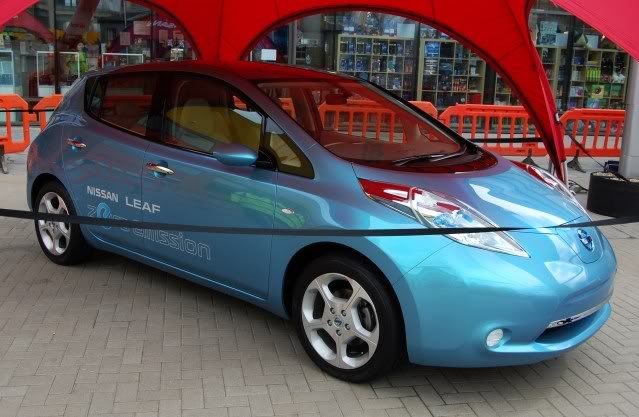 First impressions of the concept car are good. It looks, too all intents and purposes, like a regular car. This of course is for good reason, as regular cars are what people actually want. With the best intentions in the world, electric quadricycles like Reva's G-Wiz will never become commonplace as they can't offer the space and pace that people accept from the cars they're used to.
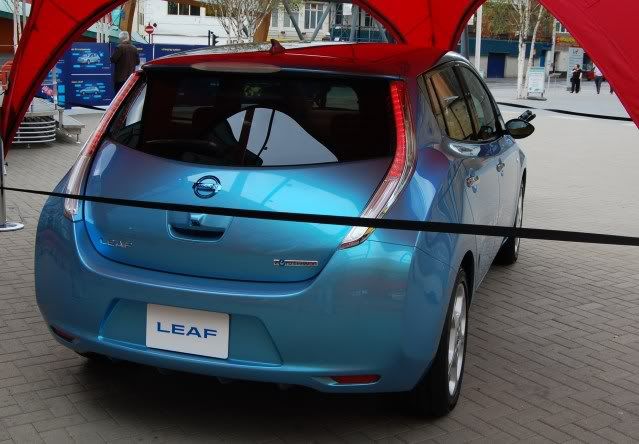 To this end then, the Leaf is off to a good start. It's a five-door hatchback with space for five, a good boot, and an inoffensive shape that manages to retain a bit of character. The front is modern and equipped with large headlights similar to those on the Ford Fiesta, and the rear has a hint of the last-generation Renault Megane about it. Even the interior is much like a normal car, with normal controls and two hooded instrument clusters. Only the large digital display in the centre console really hints at the Leaf's high-tech drivetrain.
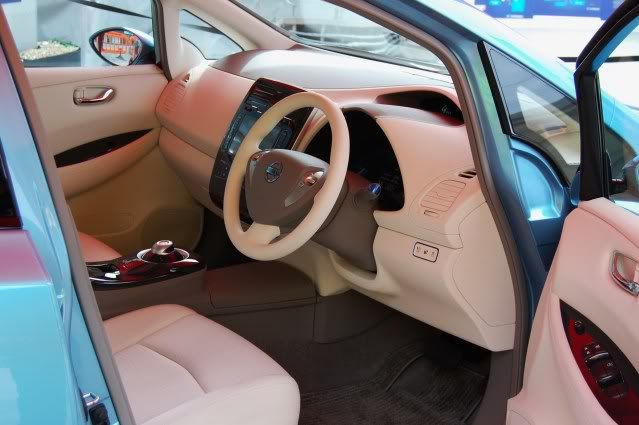 From this point, the package starts looking quite different from regular cars. The shape has been specially designed for aerodynamic efficiency - those lights split airflow over the mirrors to reduce drag, and thanks to LED technology consume less power, too. The large Nissan badge on the nose sits on a hinged flap that opens up to reveal two charging points, one for quick chargers that can provied up to 80% charge in half an hour, and the other for a more leisurely charge. Range is around 100 miles which doesn't sound like a lot, but most research seems to suggest that the majority of journeys in the UK are over fewer than eight miles, so even if you didn't put the car on charge every night most people would still have enough for ten journeys.
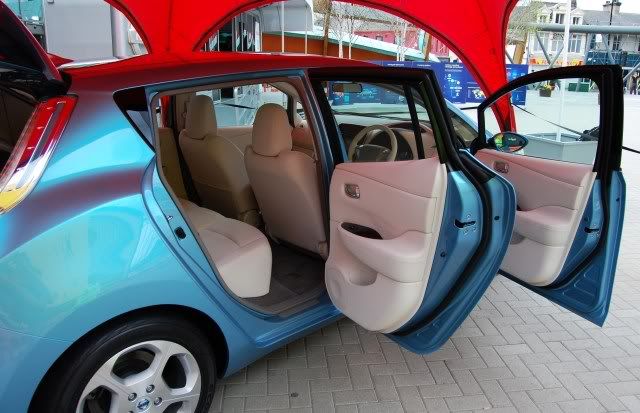 The batteries themselves are stored under the cabin floor. The electric motor they power delivers 80kw of power, or around 107bhp. They also give a huge 280nm (206lb ft) of torque from zero rpm.
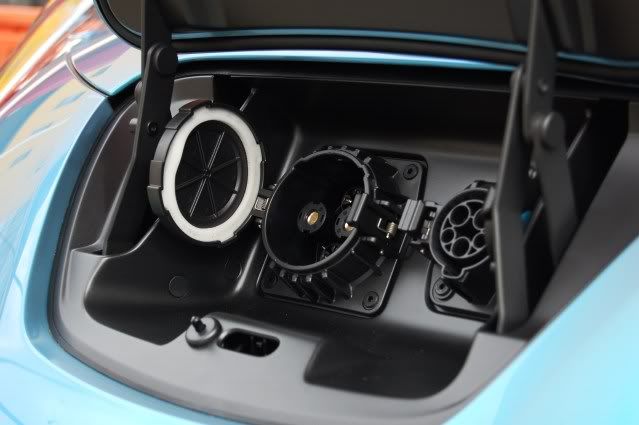 Sitting behind the wheel of the Tiida-based test car and moving off, this torque is immediately noticeable. Movement is instant and remarkably smooth in a way that even the best automatic transmission in a regular car can't manage. Throttle response can't be faulted. The silence is rather eerie at first but it makes the car seem supremely relaxing to drive - I suspect that the utter silence and smooth power delivery would make even the worst city driving seem far less stressful. As would the controls, which are simplicity in themselves - a tiny joystic selects drive (left and back), reverse (left and forwards) and a little button on the top selects park.
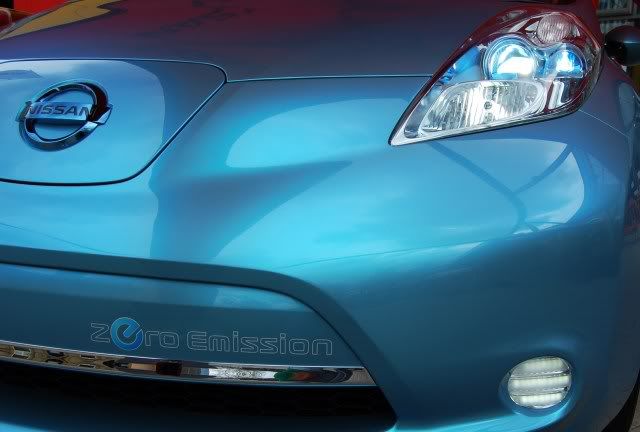 The test car didn't have regenerative braking but the production Leaf will do. As such, the brakes felt quite sharp, having probably been beefed up in the test car to make up for the lack of engine braking. Normally, simply backing off the power would see significant braking from the motor - to the point where using the car's brakes would be an uncommon occurence in town.
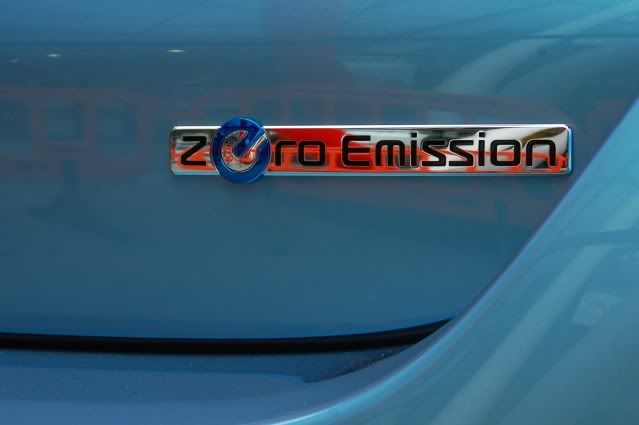 Propulsion aside, it again feels just like a regular petrol or diesel powered car. It's difficult to make too accurate a judgement on the finished product given that I only got a three laps of a very short circuit in which to test the car, but both ride and steering seemed fine - presumably no different from the petrol-powered Tiida. Again, this is important in attracting the buying public to the car - all the benefits of EV technology but with none of the drawbacks of cars like the G-Wiz.
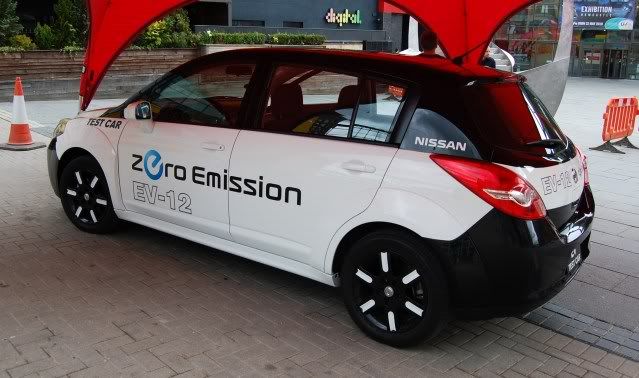 Overall, I came away very impressed with the Leaf and itching to have another go. Electric cars are rapidly getting to the point where they can be considered serious alternatives to petrol and diesel cars for many people.
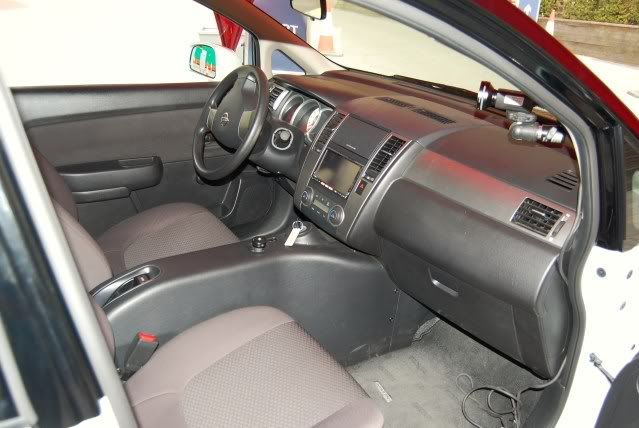 Of course, this is very much price-dependant. The number being thrown about at the moment is around £27,000 which is a lot for a small family car, but as with any technology the early adopters will bear the brunt of higher prices and this will bring down the unit cost for the manufacturers.
The Nissan Leaf is a good car even at this early stage, and a serious indication by Nissan that electric cars can walk the walk as well as talking the talk.
You can follow updates on the Nissan Leaf on their twitter page: https://twitter.com/UKNissanLEAF
All photos: ©Tarmac 2010
Tuesday, March 23, 2010
EVs present at Newcastle low carbon congress
The Baltic centre for contemporary art hosts the first Green Vehicle Congress this week.
 Only a week after the announcement that the Nissan plant in Sunderland would be manufacturing Nissan's new EV the Leaf, the Baltic gallery and Gateshead will be hosting a conference on green vehicles, focusing on EVs, hydrogen vehicles and hybrids. Visitors will be arriving from all over the world, from as far away as Japan, Korea and the USA.
Tarmac stumbled across the conference today and was able to grab some photos of the alternative-fuel vehicles on display.


 The congress has been organised by Cenex, the UK’s Centre of Excellence for Low Carbon and Fuel Cell Technologies.
Hot on the heels of the announcement that the North East of England will be building Nissan's new EV and benefiting from over a thousand new re-charging points, the conference will discuss the importance of alternative fuels and low carbon transport.
More information is available here.
(All images ©Tarmac 2010)
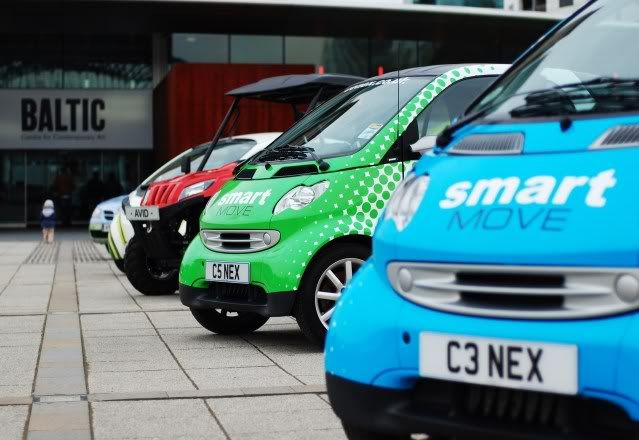 Only a week after the announcement that the Nissan plant in Sunderland would be manufacturing Nissan's new EV the Leaf, the Baltic gallery and Gateshead will be hosting a conference on green vehicles, focusing on EVs, hydrogen vehicles and hybrids. Visitors will be arriving from all over the world, from as far away as Japan, Korea and the USA.
Tarmac stumbled across the conference today and was able to grab some photos of the alternative-fuel vehicles on display.
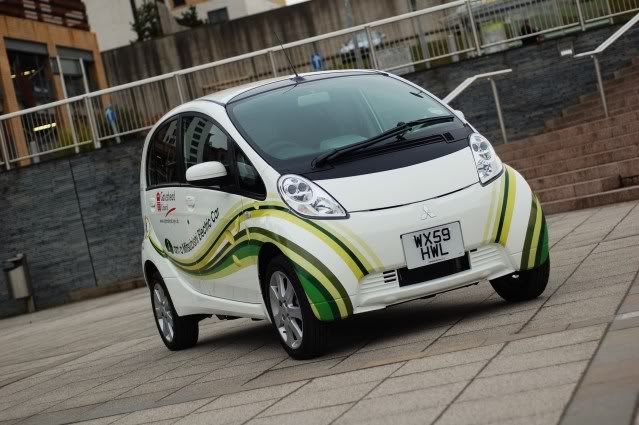
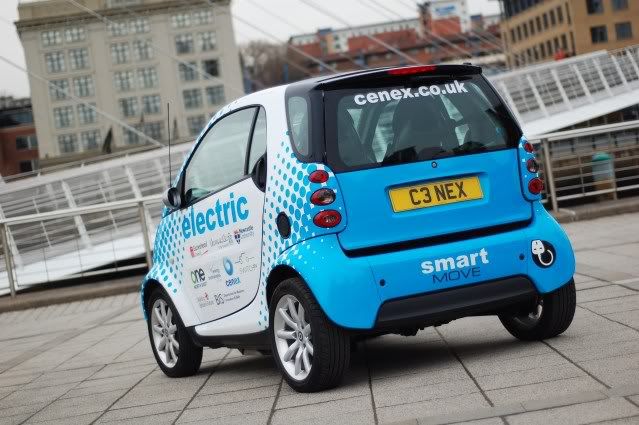
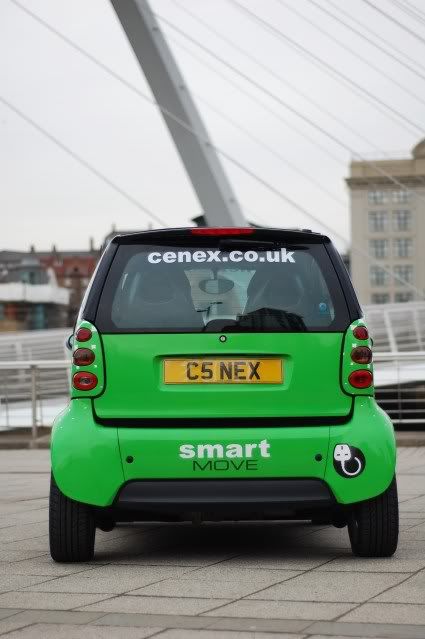
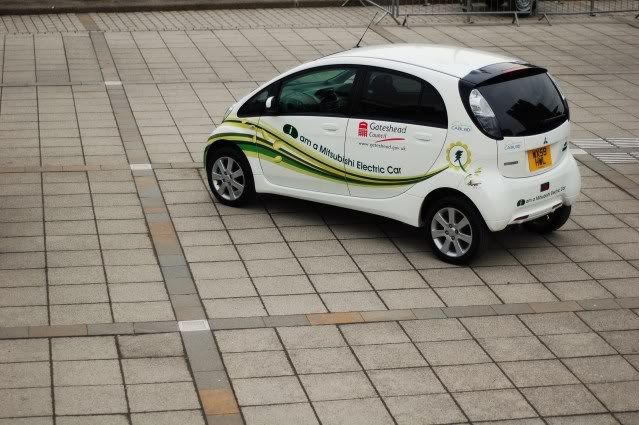
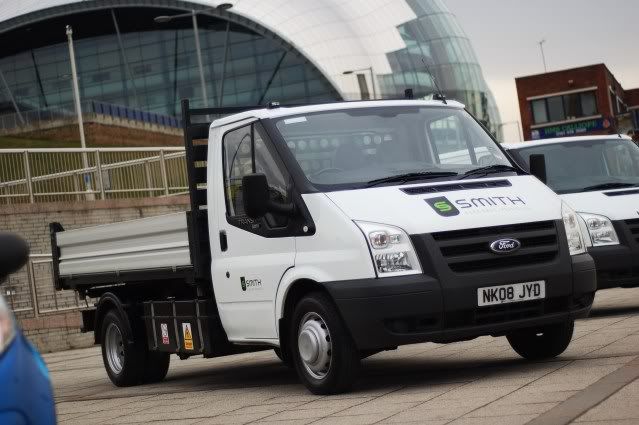 The congress has been organised by Cenex, the UK’s Centre of Excellence for Low Carbon and Fuel Cell Technologies.
Hot on the heels of the announcement that the North East of England will be building Nissan's new EV and benefiting from over a thousand new re-charging points, the conference will discuss the importance of alternative fuels and low carbon transport.
More information is available here.
(All images ©Tarmac 2010)
Friday, March 19, 2010
Nissan Leaf to be built in the UK
Nissan's upcoming electric car, the Leaf, has been confirmed for production in the UK's Nissan plant at Washington, near Sunderland, Tyne and Wear.
 The announcement is fantastic news for both jobs in the North East of England and the UK car manufacturing industry as a whole. Production is expected to commence in 2013.
Not only has the Leaf been confirmed, but it has been announced that there will be a Government investment of £20 million into the region to develop an electric recharging infrastructure, with up to 1300 charging points to be installed over the next three years. The 1300 points will stretch from Teesside to the Scottish borders, and are expected to be located as follows:
The production and the Leaf accelerate the North East to being the leading location in the UK for electric car use and development and the Government has declared the area the UK's first low carbon economic area.
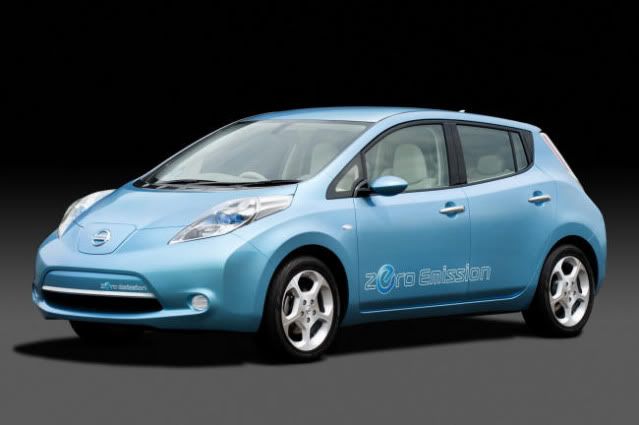 The announcement is fantastic news for both jobs in the North East of England and the UK car manufacturing industry as a whole. Production is expected to commence in 2013.
Not only has the Leaf been confirmed, but it has been announced that there will be a Government investment of £20 million into the region to develop an electric recharging infrastructure, with up to 1300 charging points to be installed over the next three years. The 1300 points will stretch from Teesside to the Scottish borders, and are expected to be located as follows:
- 250 in public car parks
- 240 at workplaces
- 240 will be available for people's homes
- 90 will be in retail car parks
- 50 in leisure centres
- 50 at on-street parking points
- 30 at transport hubs
The production and the Leaf accelerate the North East to being the leading location in the UK for electric car use and development and the Government has declared the area the UK's first low carbon economic area.
Wednesday, January 13, 2010
Detroit Debuts: Three New CT&T Cars

CT&T is a Korean company that makes tiny electric cars. You may have read about them on Autoblog Green. And if you did read about about CT&T's current products, you will know that we don't think very much of them. The truth, or a close approximation of it? They strike us as all-weather golf carts.

However, three new CT&T cars just got themselves debuted here at the Detroit Auto Show and we gotta be honest, we're mostly smitten with what we're seeing. First up is the C Squared – though the name might actually be "C Square" – we'll let you know. Anywho, the C Squared is a "creative electric sport [sic] car" that comes with a folding hard top as well as the ability to hit 95 mph. Sure, the nose is rather tragic looking but the back end's pretty good. Our biggest gripe? The $50,000 asking price.

Multi Amphibious Vehicle FTW! Now you're talking our language. Seriously, can you think of anything wrong with a six-wheeled, four-passenger electric amphibious car that goes 40 mph on land and 95 mph on the water? Neither can we! Now, some of you party-pooper types might be shaking your heads and saying "95 mph on the water? No frackin' way!" But rather than face reality we'll just stick to what we get accused of – regurgitating press releases. Says 95 mph in black and white. Also, check out how excellent this is, "...letting you enjoy all-around activities in resorts, fields, etc."

Next up is the E-Zone Plus... and, uh, yeah. It has three-doors, will eventually have five-doors, and as the press release says, "headlights." No, really. That's what it says. Moving on.
More Photos
Monday, January 11, 2010
The Detroit showcar Audi e-tron shows another variant of an electric vehicle developed by Audi

Audi is showing an uncompromising purist compact sports car with all-electric drive at the first major auto show of 2010. The Detroit showcar Audi e-tron is the name of this 3.93 meter (154.72 in) long and 1.78 meter (70.08 in) wide but just 1.22 meter (48.03 in) tall two-seater; just a few months after the debut of the Audi e-tron at the 2009 Frankfurt Motor Show, this is now the second electric concept vehicle from the brand with the four rings.
Coupled with the Detroit showcar Audi e-tron's low gross weight of around only 1,350 kilograms (2976.24 lb), high-torque power units driving the rear wheels guarantee commensurate road performance. Two electric motors with a combined output of 150 kW (204 hp) and 2,650 Nm (1954.54 lb-ft) accelerate the coupe with ASF-design aluminum body from 0 to 100 km/h (62.14 mph) in just 5.9 seconds. The Audi e-tron accomplishes the sprint from 60 to 120 km/h (37.28 - 74.56 mph) in a mere 5.1 seconds.
The Detroit showcar Audi e-tron is able to distribute its electric motors' high torque between the wheels entirely as required. Its "torque vectoring" is the key to a thrilling level of active precision and excellent traction. Thanks also to its low weight, short wheelbase and perfect weight distribution for dynamic handling, the Audi e-tron has all the drivability of a go-kart - agile, good on bends and neutral right up to the very high handling limit.
Lithium-ion batteries, located for an optimal center of gravity behind the passenger compartment and ahead of the rear axle, make an effective energy content of 45 kilowatt-hours available. This makes an operating range of up to 250 kilometers (155.34 miles) realistically possible.
As previously with the first e-tron concept car shown in Frankfurt, Audi again bases all components in this electric vehicle on an integral concept with many revolutionary details: a heat pump as an efficient means of heating up and maintaining the interior temperature. The drive system, power electronics and battery have innovative thermal management - crucial for maintaining a high operating range coupled with outstanding interior comfort.

Design and package
Audi is presenting a further variant of an electric vehicle in the form of the Detroit showcar Audi e-tron. The vehicle body has a powerful, wide and muscular stance on the road, and looks extremely compact and puristic not least thanks to the typically short sports car wheelbase of just 2.43 meters (95.67 in) - a whole 22 centimeters (8.66 in) shorter than the R8.
The sweeping line of the front end and the flat curved roof immediately identify the two-seater as an Audi. The sides reveal familiar contours: The way the dynamic line is tailored above the sill and the prominent wheel arches, as is typical for an Audi R, combine the front, side and rear into a monolithic entity and strongly emphasize the typical Audi feature of round wheel arches enclosing the large 19-inch wheels. The highly tapered front end gives the Detroit showcar Audi e-tron distinctly wedge-shaped basic proportions.
1.78 meters (70.08 in) wide, just 3.93 meters (154.72 in) long and 1.22 meters (48.03 in) tall - those are the classic proportions of a sports car. That leaves space ahead of the rear wheels for the 399 kilogram (879.64 lb) battery unit, with converter and power electronics.
The two electric motors, which have their own cooling system, are mounted on the rear axle. This special package, featuring a 40:60 weight distribution, ensures perfect balance, which contributes to the driving dynamics of the Audi e-tron.
The trapeze of the single-frame grille dominates the distinctly wedge-shaped front end and is flanked by two large air intakes. The top of the grille merges into the flat strips of the adaptive matrix beam headlight modules with their clear glass covers. All light units use ultra-efficient LED technology.
The headlights are the core of a fully automatic light assistance system that reacts flexibly to any situation. The new technology recognizes weather conditions and adapts the illumination to rain or fog. The technology at the heart of the light assistance system is a camera that works together with a fast computer to detect oncoming traffic, recognize lanes and measure visibilities, such as in the event of fog.
If there is oncoming traffic, the high beams are turned off in the corresponding section of the illumination field. The cornering light system analyzes data from the navigation system and illuminates corners before the driver steers into them. The Detroit showcar Audi e-tron does not have conventional fog lamps that consume additional power. It intelligently varies the low beams instead; in fog, for example, it produces a wider, more horizontal illumination field, thus significantly reducing the glare from the car's own lights.
The variability of the headlights is also reflected in their design. The LED elements change appearance and thus the character of the front end of the vehicle depending on the speed driven and the ambient conditions. The innovative lighting technology now offers the Audi designers almost as much design freedom as the shape of the body does.
One design element that is specific to electric vehicles developed by Audi - such as the Audi e-tron - are the air intakes in the single-frame grille and behind the side windows on the C-post. They are closed flush under normal circumstances and opened by retracting slats when additional cooling air is required. The slats above the drive unit then also open to provide a better through-flow of air. These measures, too, maximize efficiency - the concept car is outstanding for an already low drag coefficient that is further improved when the flaps are closed.

The ASF body
Systematic lightweight construction is an even more important prerequisite for efficiency and range with electric vehicles than for conventionally powered automobiles. Lightweight construction is moreover the key to thrilling handling characteristics. Audi developers focused on a core competence of the company when creating the Detroit showcar Audi e-tron: The body structure is based on Audi Space Frame technology (ASF), with a hybrid design approach adopted. All add-on parts - doors, lids, sidewalls and roof - are made of a fiber-reinforced plastic.
The combination of aluminum and carbon fiber-reinforced composite material guarantees supreme rigidity coupled with low weight. Audi will soon use this technology in a similar form for future production vehicles. Despite the complex drive system layout with two electric motors and a high-capacity battery system, the total weight of the Audi e-tron showcar on display in Detroit is only around 1,350 kilograms (2,976.24 lb).

Interior and operating concept
Visual and functional references to the new drive concept characterize the purist interior design. They establish a connection between proven Audi genes and new formal hallmarks. Typical for the Audi design idiom is the reduction of the architecture, controls and information output to the essentials in favor of visible lightweight construction and a tidy overall impression.
The slim dash has a curve that extends laterally into the door panels. With no need to allow for a transmission, shifter and cardan tunnel, the designers took advantage of the opportunity to create a particularly slim and lightweight center tunnel and convex, arching center console. The flush gear selector, with which the driver chooses between the modes forward, reverse and neutral, emerges from the tunnel when the vehicle is started.
The Audi e-tron's cockpit, which represents a further development in an electric vehicle, is also oriented toward the driver - a further characteristic Audi trait. Instead of the classic instrument cluster, the concept car is the first Audi to be equipped with a large built-in central display with integrated MMI functions. It is flanked by two round dials.
The MMI is controlled via a scroll pad with a touch-sensitive surface on the steering wheel ("MMI touch") - an element inspired by modern smartphones. The steering wheel itself is clearly flattened off at both the top and bottom, in a clear reference to motor sport.
A smartphone that can be integrated into the front section of the center console interfaces between the vehicle, the driver and external information sources. The driver can use a suitably equipped conventional smartphone as a car phone, address database, navigation system and video player. At the same time they can also use it as an operating unit for many specific on-board systems in the Audi e-tron. Many phones that are suitable for these functions are already available from various manufacturers.
The driver can then enter their route plan or adjust the sound system to their individual preferences, all from the comfort of their own home, for example. The Smartphone and vehicle communicate via the mobile communications network, even over considerable distances.
The system also provides a security function for the owner; within the range of the WLAN it can constantly monitor the current status of the vehicle, for instance whether all windows and doors are closed. If the Audi e-tron showcar on display in Detroit is parked at a charging station, for example, it also sends details of the current charge status to the driver's smartphone.
While an analog speedometer on the driver's right provides speed information, the instrument dial on their left tells them how much power is being drawn. The central display shows the range in the status bar and presents all key information from the infotainment and navigation systems. It also provides the driver with relevant data from the vehicle's communication with its surroundings. The instruments combine the analog and the digital worlds into a single unit.
Characteristic for the concept of the Audi e-tron - and therefore also characteristic for a further development in an electric vehicle - is the near total elimination of switches and small components such as the ignition. The climate control unit is located to the right above the steering wheel. The display provides temperature and ventilation information. Again drawing inspiration from a smartphone, the system is controlled by means of a touch-sensitive sliding control.
The equally racing-inspired lightweight bucket seats combine excellent lateral support with comfort. Two contrasting colors delineate the various zones of the interior. The colors and the high-quality materials combine elegance and sportiness.

Drive system and energy supply
Two asynchronous electric motors with a total output of 150 kilowatts (204 hp) give the Detroit showcar Audi e-tron the performance of a genuine sports car. The concept car can accelerate from 0 to 100 km/h (0 - 62.14 mph) in 5.9 seconds if necessary, and goes from 60 to 120 km/h (37.28 - 74.56 mph) in 5.1 seconds. The torque is distributed selectively to the wheels based on the driving situation and the condition of the road surface, resulting in outstanding traction and handling.
The top speed is limited to 200 km/h (124.27 mph), as the amount of energy required by the electric motors increases disproportionately to speed. The range in the NECD combined cycle is approximately 250 kilometers (155.34 miles).
The energy storage unit is charged with household current (230 volts, 16 amperes) via a cable and a plug. The socket is behind a cover at the back of the car. The charging time when the battery is empty is around 11 hours, but heavy current (400 volts, 32 amperes) cuts this to around just two hours.
The battery is charged not only when the car is stationary, but also when it is in motion. The keyword here is recuperation. This form of energy recovery and recharging of the battery is already available on many Audi production models. During braking, the alternator converts the kinetic energy into electrical energy, which it then feeds into the on-board electrical system.
The Detroit showcar Audi e-tron in its further developed version goes one decisive step further into the future; an electro-mechanical brake system means the potential of electric motors for energy recovery can now be exploited. A hydraulic fixed-caliper brake is mounted on the front axle, with two novel, electrically actuated floating-caliper brakes mounted on the rear axle. These floating calipers are actuated not by any mechanical or hydraulic transfer elements, but rather by wire ("brake by wire"). In addition, this eliminates frictional losses due to residual slip when the brakes are not being applied.
By virtue of being isolated from the brake pedal, the Audi e-tron's electric motors can convert the entire deceleration energy into electric current and recover it. The electromechanical brake system is only activated if greater deceleration is required. These control actions are unnoticeable to the driver, who feels only a predictable and constant pedal feel as with a hydraulic brake system.

An automotive first: the heat pump
The heat pump, too - which made its first appearance in an automobile on the Audi e-tron concept car shown in Frankfurt - helps to boost efficiency and range. Unlike a combustion engine, the electric drive system generally does not produce enough waste heat to effectively heat the interior. Other electric vehicles are equipped with electric supplemental heaters, which consume a relatively large amount of energy. The heat pump used by Audi - and commonly used in buildings - is a highly efficient machine that uses mechanical work to provide heat with a minimum input of energy.
A high-efficiency climate control system is used to cool the interior. It works together with the thermal management system to also control the temperature of the high-voltage battery. This is because the battery, power electronics and electric motors must be kept at their respective ideal operating temperatures to achieve optimal performance and range.
As soon as the vehicle is connected to a charging station the vehicle is preconditioned as appropriate by the thermal management and other associated systems. In cold conditions the drive system is preheated, and in hot conditions it is cooled. This preconditioning can also be extended to the interior, if necessary, so that the passengers can step into a cabin that has been heated or cooled as appropriate for their comfort.

Driving dynamics
The drive system's power is transferred to the road by the rear wheels, reflecting the Audi e-tron's weight distribution of 40:60.
Both the individual motors, which are installed behind the wheels close to the vehicle's center line as wheel drives, also enable the Detroit showcar Audi e-tron's lateral dynamics to be intelligently controlled. This also boosts traction. Similar to what the sport differential does in conventional Audi vehicles, torque vectoring - the targeted acceleration of individual wheels - makes the newly developed electric drive of the Detroit showcar Audi e-tron even more dynamic while simultaneously enhancing driving safety.
Understeer and oversteer can be corrected by not only targeted activation of the brakes, but also by precise increases in power lasting just a few milliseconds. The concept car remains extremely neutral even under great lateral acceleration and hustles through corners as if on the proverbial rails.
The chassis has triangular double wishbones made of forged aluminum components at the front and rear axles - a geometry that has proven in motor sports to be the optimal prerequisite for high agility, uncompromising precision and precisely defined self-steering behavior. A taut setup was chosen for the springs and shock absorbers, but it is still very comfortable.
The direct rack-and-pinion steering gives finely differentiated feedback. Its electromechanical steering boost varies with speed, so that the Detroit showcar Audi e-tron only has to provide energy while steering, but not while driving straight ahead.
As befits its status, the Audi concept car rolls on 19-inch wheels of 35-spoke design. 235/35 tires up front and 255/35 tires at the rear provide excellent grip. Another special feature of the tires: Audi designers created the profile specifically for the Detroit showcar Audi e-tron.
The equipment and data specified in this document refer to the model range offered in Germany. Subject to change without notice; errors and omissions excepted.
More Photos
Wednesday, January 6, 2010
WESTFIELD SPORTSCARS JOIN EV CUP [Video]

Westfield Sportscars join EV Cup with their innovative electric race car, the iRACER.
Westfield's iRACER is a track focused electric vehicle designed and engineered to support a growing demand for zero emission sports cars. With a target total weight of 600kg, powered by two motors delivering 80kW, the final vehicle will have a sub 5 second 0-60mph time, with an electronically limited top speed of 110mph.
Using an intelligent and flexible design, over half (approx. 100kg) of the state of the art Lithium Phosphate batteries will be stored under the floor to lower the centre of gravity. For a greater range and for better weight distribution, additional batteries can also be positioned towards the front of the vehicle. While this flexibility presents a number of practical and financial benefits, it also offers an additional competitive element for optimal vehicle setup for different circuits on the EV Cup calendar.

Westfield's iRACER joins an already exciting SportsEV class line up. Dr. Paul Faithfull, Technical Director of Westfield Sportscars, "we are excited by the prospect of racing against other electric vehicles at circuits across Europe and beyond. EV Cup represents a great opportunity for us to develop vehicle technology on the back of this direct competition, a way to benchmark and to show that electric racing can be as dramatic and exciting as conventional motorsport."
Says Managing Director Sylvain Filippi: "Westfield's iRACER is another example of the excitement behind performance electric vehicles, this time, open top and very lightweight. We look forward to working with Westfield and witnessing the success of their iRACER."

The iRACER is the result of a collaborative project between Westfield Sportscars, and Niche Vehicle Network partners Potenza Technology, Delta Motorsport, RDM Automotive, and Coventry University. Funded through an Advantage West Midlands programme, the vehicle has been styled by upcoming designer Elliott Hawkins from the Royal College of Arts.
Westfield's iRACER is a track focused electric vehicle designed and engineered to support a growing demand for zero emission sports cars.

Westfield iRACER Specs
General:
- Kerb Weight - 600kg
- Length - 3600mm
- Width - 1635mm
- Installation - Rear, rear wheel drive
- Bodywork - Lightweight and recyclable
Technical:
- Drive motor - Oxford Yasa Motors, 80Kw, 1000Nm @ the wheels
- Battery - 170kg, Lithium Phosphate
- 0-60mph - under 5 seconds
- Top speed - 110mph (electronically limited)
- Range - 55 race miles on a single charge (extendable)
- Recharge - 2 hours charge time from three phase generator
More Photos
Friday, January 1, 2010
Mahalo CEO Jason Calacanis giving away his Tesla Model S (you know, when he gets it)

Jason Calacanis, CEO of Mahalo.com and erstwhile founder of Weblogs Inc. (of which Autoblog and AutoblogGreen are a part) is a big fan of Tesla, and now he's announced that he's giving one away. Calacanis is already the owner of an early Tesla Roadster which he let us drive in late 2008. Even before he took delivery of his Roadster, Calacanis announced his intention to buy the company's second vehicle, the Model S. When Tesla unveiled the sedan last spring, Calacanis made good on his promise and put down deposits on two of the upcoming electric car, including serial #1.

Now Calacanis wants to give away his second Model S by getting his newly established Twitter account @auto to number 1 on the micro-blogging service. That position is currently held by actor and cougar-catcher Ashton Kutcher who has over 4.2 million followers. As this is written, @auto is up to almost 1,000 followers after only one hour. If you want a crack at a free Model S, just follow @auto.

More Photos
Monday, December 28, 2009
MINI E Electric Car Performance in Winter Testing

Recent snowfall gave me a chance to experience driving the MINI E electric car in snow and ice conditions, and the frigid northeast weather has been a test of its batteries.

I am leasing the MINI E for a one year period as a part of BMW’s field test trial, and am among 449 other drivers in California, New Jersey, and New York. At this point, after six months of driving, the car has just over 7700 miles.

There has been a pronounced decline in battery range in the cold weather. On a recent trip at a temperature of 23 degrees Fahrenheit and including a two-hour 110 volt charge in the middle, the battery meter hit zero miles/zero percent after just 55 miles (see graphic). The car is billed as having a 100 mile range.
more detail. ...


More Photos
Thursday, November 19, 2009
Previous electric car range record already decimated...
Not even so long as one month ago a team of two drivers recorded 313 miles in a Tesla Roadster to set a new electric vehicle distance record.
Clearly, members from the Japan EV Club (Japanese site) thought they could do better, and have gone 44 miles better in a Daihatsu Mira EV van. Sanyo provided the batteries and the whole lot is transmitted through the Mira's standard five-speed transmission. Even though conditions look less than ideal and the trip from Tokyo to Osaka isn't the flattest and most EV-friendly journey in the world, the team benefited from the Mira's light weight, a large battery and some low rolling-resistance Toyo tyres. The journey took 13 hours, and if you can read Japanese, there's probably more information on the team's own website.
 Place your bets on how long it takes for another team to break the record again... News via AutoBlogGreen and Car Watch (Japanese site).
(Image: Car Watch)
Clearly, members from the Japan EV Club (Japanese site) thought they could do better, and have gone 44 miles better in a Daihatsu Mira EV van. Sanyo provided the batteries and the whole lot is transmitted through the Mira's standard five-speed transmission. Even though conditions look less than ideal and the trip from Tokyo to Osaka isn't the flattest and most EV-friendly journey in the world, the team benefited from the Mira's light weight, a large battery and some low rolling-resistance Toyo tyres. The journey took 13 hours, and if you can read Japanese, there's probably more information on the team's own website.
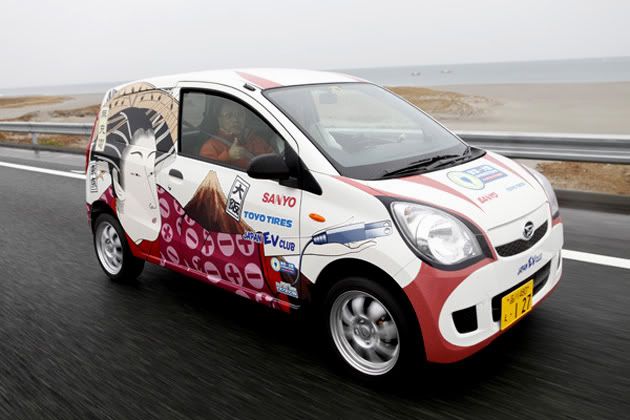 Place your bets on how long it takes for another team to break the record again... News via AutoBlogGreen and Car Watch (Japanese site).
(Image: Car Watch)
Saturday, November 7, 2009
Renault's ZEs... driven by Autocar, confirmed for production
Renault will be the first major car manufacturer in the world to offer a range of zero-emissions all-electric vehicles for sale when the Twizy and Zoe go into production in 2011.
The French manufacturer is taking quite a risk given that this will leave many countries with only a short space of time in which to set up a reasonable electric charging infrastructure, though according to Autocar magazine who feature the three Renault ZE concepts this week, Israel and Denmark have both made commitments to importing 100,000 electric Fluence models by 2012. Renault will be establishing a network of "Quickdrop" centres (areas where ZE customers can take their car to have the entire battery unit changed for a fully-charged on in around three minutes) in these countries.
 The Zoe is supermini-sized (only slightly larger than a Clio) though unlike the Twizy and the larger Fluence, the styling might well change significantly for production. Renault say the Zoe is more representative of what can be done in terms of size. Range is around 100 miles and the motor makes the equivalent of 95bhp giving a 90mph top speed.
The French manufacturer is taking quite a risk given that this will leave many countries with only a short space of time in which to set up a reasonable electric charging infrastructure, though according to Autocar magazine who feature the three Renault ZE concepts this week, Israel and Denmark have both made commitments to importing 100,000 electric Fluence models by 2012. Renault will be establishing a network of "Quickdrop" centres (areas where ZE customers can take their car to have the entire battery unit changed for a fully-charged on in around three minutes) in these countries.
The Twizy
The Twizy microcar is the smallest of Renault's ZE (Zero-Emissions) concepts and has been confirmed for production in Spain in 2011. The car/scooter is a tandem two seater and is designed solely for city driving, with performance similar to that of a 125cc scooter (topping out at around 50mph). Range is short at roughly 60 miles, but realistically you don't need any more than that in a city commute and even in a city like London you should be able to get at least a couple of days' commuting out of it. As you can see in Autocar's video above, the Twizy is apparently quite fun to drive.The Zoe
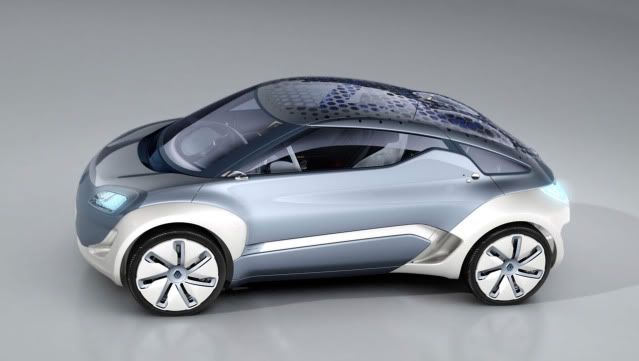 The Zoe is supermini-sized (only slightly larger than a Clio) though unlike the Twizy and the larger Fluence, the styling might well change significantly for production. Renault say the Zoe is more representative of what can be done in terms of size. Range is around 100 miles and the motor makes the equivalent of 95bhp giving a 90mph top speed.
The Fluence
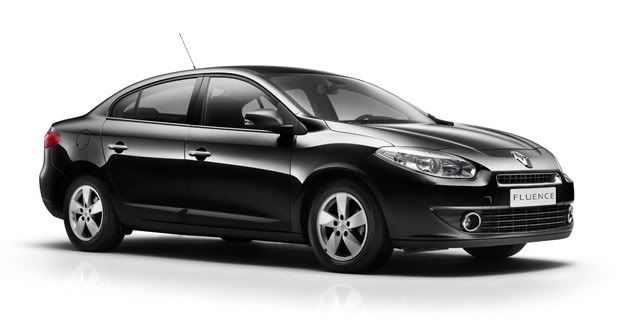
 Looking more production-ready than either the Twizy or the Zoe is the Fluence. Styling-wise it shares hints of Renault's 2005 Fluence concept as well as a hint of Tesla Model S. However, it's likely to look much more similar to the production petrol and diesel Fluence that appears to be replacing the old Megane saloon. The concept has the same powertrain as the Zoe and shares similar performance and range.
Renault are clearly taking a large risk putting four EVs on sale at the same time (the fourth is an EV version of the current Kangoo van) but this may well be the kick other manufacturers (and indeed customers) need to embrace electric car technology. We await 2011-12 eagerly to see if customers are ready to take the plunge...
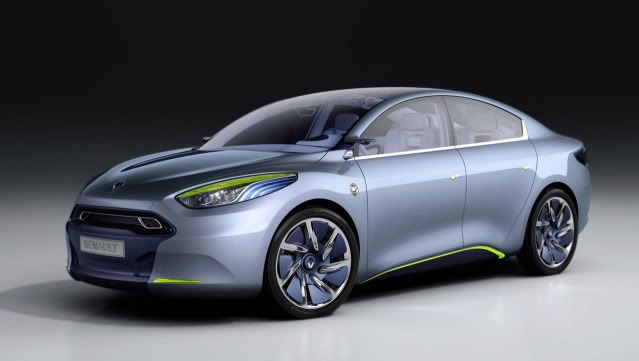 Looking more production-ready than either the Twizy or the Zoe is the Fluence. Styling-wise it shares hints of Renault's 2005 Fluence concept as well as a hint of Tesla Model S. However, it's likely to look much more similar to the production petrol and diesel Fluence that appears to be replacing the old Megane saloon. The concept has the same powertrain as the Zoe and shares similar performance and range.
Renault are clearly taking a large risk putting four EVs on sale at the same time (the fourth is an EV version of the current Kangoo van) but this may well be the kick other manufacturers (and indeed customers) need to embrace electric car technology. We await 2011-12 eagerly to see if customers are ready to take the plunge...
Thursday, March 26, 2009
Abandoned fuel stations to go electric?
A plan to keep the increasing number of electric cars available buzzing along the streets has been revealed by US firm Evoasis.

The San Diego based company has announced that they have plans to turn disused fuel stations, both in the UK and elsewhere, into electric vehicle (EV) charging stations. The plan is known as R2G (Red 2 Green), the name coming from London's red buses and tube routes, with green being fairly self-explanatory. The best news is that rather than standing outside in the cold watching your bank balance decrease, EV owners will be able to go inside, watch films and download music and TV in a lounge area. Charges are expected to take around 20 minutes, as this is the typical time for a "fast charge" in many EVs.
The other benefit to the system is that while your EV is plugged in, Evoasis want to offer diagnostics and battery tests, as well as the ability to download content for your in-car entertainment.

The first stations are due to be rolled out this Autumn, likely starting with major locations in London such as Euston or Waterloo station, with others following. This should follow hot on the heels of cars such as the new Mitsubishi iMiev which is due in the Summer, and benefit drivers of cars like the THiNK and NICE which are already becoming popular.
Images ©Evoasis via AutoExpress
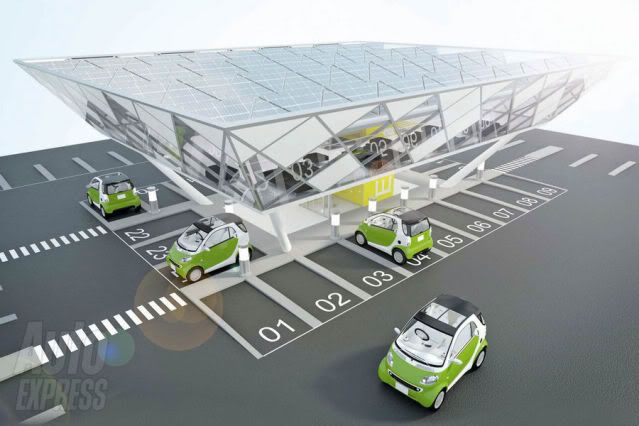
The San Diego based company has announced that they have plans to turn disused fuel stations, both in the UK and elsewhere, into electric vehicle (EV) charging stations. The plan is known as R2G (Red 2 Green), the name coming from London's red buses and tube routes, with green being fairly self-explanatory. The best news is that rather than standing outside in the cold watching your bank balance decrease, EV owners will be able to go inside, watch films and download music and TV in a lounge area. Charges are expected to take around 20 minutes, as this is the typical time for a "fast charge" in many EVs.
The other benefit to the system is that while your EV is plugged in, Evoasis want to offer diagnostics and battery tests, as well as the ability to download content for your in-car entertainment.
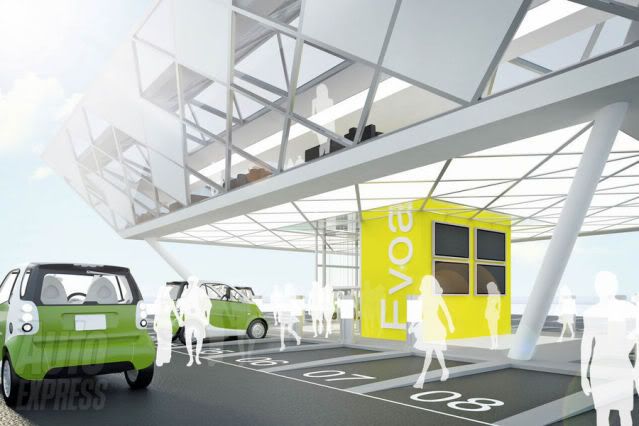
The first stations are due to be rolled out this Autumn, likely starting with major locations in London such as Euston or Waterloo station, with others following. This should follow hot on the heels of cars such as the new Mitsubishi iMiev which is due in the Summer, and benefit drivers of cars like the THiNK and NICE which are already becoming popular.
Images ©Evoasis via AutoExpress
Subscribe to:
Posts (Atom)